


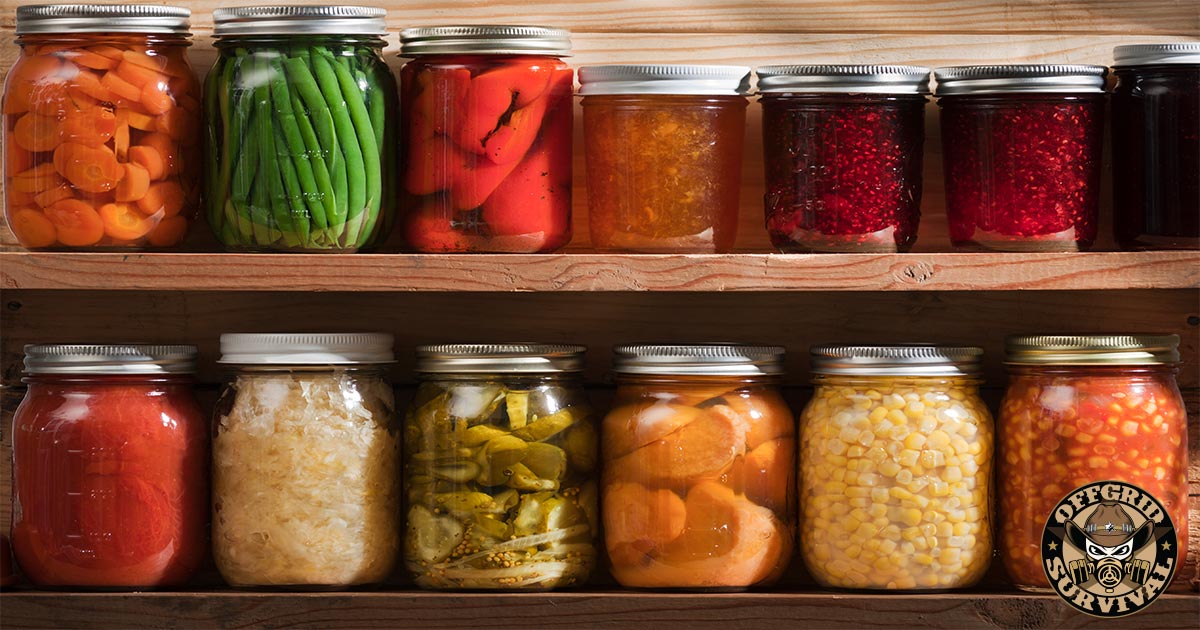
I’ve been storing food for over two decades now, and I’ll tell you something the survival blogs won’t: most of what people stockpile ends up in the trash. I’ve seen it happen. A guy I know spent close to $4,000 on “emergency food” back in 2012. When he finally opened some of it a few years back, half the buckets smelled like a wet dog and the other half had turned into brick. Four grand, gone.
The problem isn’t that food storage doesn’t work. It works fine — people have been doing it for thousands of years without vacuum sealers or fancy buckets. The problem is that most folks store the wrong things, in the wrong containers, in the wrong place, and nobody ever tells them until it’s too late.
So let’s fix that. This is everything I know about what keeps, what doesn’t, and how to build a real food supply without wasting money on marketing garbage.
The Four Enemies of Stored Food
Before we talk about specific foods, you need to understand what kills them. There are only four things, and if you control all four, food lasts a shockingly long time.
Oxygen. This is the big one. Oxygen makes fats go rancid, feeds insects and their eggs (yes, the eggs are already in your flour when you buy it — sorry), and slowly degrades vitamins. Get the oxygen out and you’ve solved most of your problems.
Moisture. Anything above about 10% moisture content is a gamble for long-term storage. Moisture means mold, and mold means the whole container is garbage. This is why you can store wheat for decades but not fresh bread for a week.
Heat. Every 18 degrees Fahrenheit you raise the storage temperature, you roughly cut the shelf life in half. Food stored at 70 degrees might last 25 years. The same food in a 100-degree garage might last 5. Your attic is not a storage room. Neither is your garage in most of the country. If you’re in a hot climate like the desert Southwest, this is your number one problem, bigger than anything else on this list.
Light. Light degrades fats and vitamins. This one’s easy — store food in opaque containers or a dark room and forget about it.
Control those four things and you’re 90% of the way there. Everything else is detail.
The Foods That Actually Last 25-30 Years
Here’s the honest list. These are foods that, stored properly (sealed in mylar with oxygen absorbers, kept cool and dry), will genuinely still be edible when your kids are grown.
Hard wheat. Red or white, doesn’t matter much. Wheat is the king of storage foods. Sealed properly, wheat found in decades-old storage has still sprouted and still ground into usable flour. The catch: you need a grain mill to use it, and if your family doesn’t already eat wheat, a crisis is a terrible time to introduce it. More on that later.
White rice. Note I said white, not brown. Brown rice has oils in the bran layer that go rancid in six months to a year. White rice, with the bran removed, will last 25+ years sealed. This trips up a lot of health-conscious people. I get it, brown rice is better for you. It’s also worthless as a storage food. Store white.
Dried beans. Pinto, black, navy, kidney — all of them store for decades. Here’s the thing nobody mentions: really old beans get hard. After 10-15 years, they can take forever to soften, no matter how long you soak them. They’re still edible and still nutritious, but you might end up grinding them into flour or pressure cooking the daylights out of them. Rotate your beans every decade or so and you’ll never hit this problem.
Rolled oats. Cheap, familiar, easy to prepare, and they last 25+ years sealed. Oats might be the single best beginner storage food. Everyone knows how to make oatmeal. Nobody needs a grain mill.
Pasta. Sealed in mylar with oxygen absorbers, plain pasta lasts 25+ years. Egg noodles less so — the egg shortens the life. Stick to regular semolina pasta.
Sugar. Sugar never goes bad. Ever. It might harden into a block, but a hammer fixes that. Don’t put oxygen absorbers in sugar, by the way — it turns it into a solid brick you’ll need a chisel for. Just seal it against moisture.
Salt. Same deal. Salt is a rock. Store plenty — you’ll need it for preserving food, not just seasoning it. I keep at least 50 pounds and I don’t think that’s excessive.
Honey. Real honey lasts basically forever. It’ll crystallize, but warm water brings it back. Make sure you’re buying actual honey, not “honey blend” syrup garbage.
Powdered milk. Nonfat powdered milk, properly sealed, goes 20+ years. The instant stuff from the grocery store in its original box? Two years, maybe. Packaging matters.
Dehydrated potato flakes. Surprisingly good storage life at 25+ years sealed. Cheap, calorie-dense, familiar.
The Foods People Store That Turn to Garbage
This is the part that saves you money. Here’s what fails, and why.
Anything with oil or fat in it. This is the master rule. Fat goes rancid, and no amount of packaging fully stops it. That means brown rice, whole wheat flour, nuts, granola, crackers, and most snack foods have short lives no matter what you do. Nuts sealed with oxygen absorbers might stretch to two years. That’s it.
Cooking oil itself. Vegetable oil lasts maybe two years. Coconut oil does better — five years or more because it’s mostly saturated fat. Some people store ghee or lard, which can go a few years. But there is no 25-year cooking oil, and anyone selling you one is lying. Plan to rotate oil constantly.
Yeast. Dead in two years, faster if it’s warm. Store it in the freezer if you can. Better yet, learn to make sourdough starter from scratch, because that skill doesn’t expire.
Most canned goods past their prime. Commercial cans are good for years past the printed date — that date is about quality, not safety. But “years past the date” is not “decades.” Acidic foods like tomatoes and fruit eat through can linings faster. High-acid canned goods: 18 months to 2 years for best quality. Low-acid stuff like meat and vegetables: 2 to 5 years, often longer if stored cool. Any can that’s bulging, leaking, badly rusted, or sprays when opened goes straight in the trash. No exceptions, no sniff test. Botulism doesn’t smell like anything.
Flour. White flour lasts longer than whole wheat, but even white flour is done in a year or two on the shelf, maybe 10 years sealed under ideal conditions. This is why serious storage people keep whole wheat berries and a mill instead — the intact kernel protects the oils inside.
The “25-year meal buckets” from TV. Here’s my most controversial take. Those famous emergency food buckets advertised everywhere are, calorie for calorie, some of the worst value in the entire industry. Read the labels sometime. A lot of those “servings” are 150-200 calories of rice, pasta, and flavored powder. A bucket advertised as a “month of food” might contain enough calories to keep an adult alive for a week and a half if they’re not doing anything. You can build the equivalent yourself from bulk staples for a quarter of the price, and it’ll actually taste like food.
How to Package Food So It Lasts
Alright, here’s the actual method. This is what I do, it’s what serious long-term storage folks have done for decades, and it works.
You need three things: food-grade buckets, mylar bags, and oxygen absorbers.
The bucket is armor. It keeps out rodents, light, and physical damage. The mylar bag inside the bucket is the real barrier — plastic buckets alone are slightly permeable to oxygen over the years, which surprises people. The oxygen absorbers finish the job by pulling out whatever air is left inside.
Here’s the process, step by step:
- Get a 5-gallon food-grade bucket. Bakeries and grocery store delis often give these away or sell them for a couple bucks — they get frosting and pickles in them and toss them constantly. Wash them well.
- Line it with a 5-gallon mylar bag. Buy the thick ones, 5 mil or better. The thin cheap ones puncture.
- Fill it with your grain, rice, beans, whatever. Shake and tap it down as you go — settling matters, you can fit several more pounds in a properly settled bucket.
- Drop in your oxygen absorbers. For a 5-gallon bucket of dense grain, 2,000cc of absorber capacity is the standard number. That usually means one 2,000cc absorber or a handful of smaller ones.
- Seal the mylar with a hot clothes iron or a hair straightener across a board. Leave a small gap, press out extra air, seal the last inch.
- Lid the bucket, label it with the contents and date, and put it somewhere cool and dark.
Within a day or two, the mylar should suck down tight against the food like it’s vacuum sealed. That’s how you know the absorbers did their job. If the bag stays puffy, something’s wrong — you either have a leak or dead absorbers.
Two big warnings on oxygen absorbers. First, they start dying the second you open the package. Work fast, and store the extras in a small sealed jar, not a ziploc — ziplocs leak air. Second, once again: no absorbers in sugar or salt. You’ll create a cinder block.
A 5-gallon bucket holds roughly 33-37 pounds of wheat, 33 pounds of rice, or about 35 pounds of beans, give or take depending on settling. Do the math on calories and you’ll see why bulk staples destroy commercial buckets on value.
How Much Food Do You Actually Need?
Everybody wants a number, so here’s a real one. An adult doing physical work — and in a real grid-down situation, you will be doing physical work — needs 2,500 to 3,000+ calories a day. Not the 1,600-calorie starvation math that food bucket companies use.
For one adult for one year, the old-school baseline that’s been used for generations of food storage looks something like this:
- 300 pounds of grains (wheat, rice, oats, pasta, cornmeal combined)
- 60 pounds of dried beans and legumes
- 60 pounds of sugar and honey
- 20 pounds of fats and oils
- 16 pounds of powdered milk
- 8 pounds of salt
That’s the survival skeleton — roughly 2,000+ calories a day of plain, boring, keep-you-alive food. It is not exciting. You then layer on top of it: canned meats, canned vegetables and fruit, spices, coffee, bouillon, tomato powder, dried onions, hot sauce. The staples keep you alive; the extras keep you sane. Do not skip the extras. Appetite fatigue is real — people, especially kids and the elderly, will genuinely eat less and less of food they hate, even when they’re hungry. Variety isn’t a luxury in long-term storage. It’s a requirement.
Store What You Eat, Eat What You Store
This is the oldest rule in food storage and people still ignore it, so I’m going to hammer it.
If your family has never eaten a pot of beans and rice in their lives, 400 pounds of beans and rice is not a plan. It’s a pile. A crisis is the worst possible moment to overhaul your family’s entire diet — you’ll fight digestive problems, picky kids, and morale collapse all at once, right when stress is already through the roof.
The fix is rotation. Build your storage out of things you actually cook with, use the oldest stuff first, and replace what you use. Your pantry becomes a slow-moving river instead of a stagnant pond. Nothing expires because nothing sits for 20 years. This also means you’re eating your storage at the price you paid years ago, which these days is its own kind of return on investment.
Keep the true 25-year stuff — the sealed buckets of wheat, rice, beans, oats — as your deep reserve that you don’t touch. Keep a working pantry of 3-6 months of normal food in front of it that constantly rotates. That two-layer system is what actually works for real families, and it’s how people quietly rode out job losses, storms, and shortages without ever calling themselves preppers.
Where to Put It All
Cool, dark, and dry. That’s the whole requirement, and it’s harder than it sounds.
Basements are usually the best spot in most of the country — naturally cool and dark. Watch for moisture; get buckets up off concrete floors on boards or pallets, because concrete wicks moisture and will slowly wreck even plastic buckets sitting directly on it.
Interior closets work. Under beds works. I’ve seen people build platforms out of food buckets and throw a mattress on top — ugly, but 40 buckets just disappeared into a bedroom.
Garages and attics are where food goes to die in most climates. Summer heat in those spaces will quietly cut your 25-year foods down to 5-year foods, and you won’t know until you open a bucket of stale, off-tasting grain a decade from now.
One more thing: spread it out if you can. A burst pipe, a fire, or a break-in shouldn’t be able to take out your entire supply in one shot. Some in the basement, some in a closet upstairs, maybe some at a relative’s place. Old-timers called it not keeping all your eggs in one basket for a reason.
Don’t Forget the Water and the Tools
Quick reality check to close on: almost everything on the storage list needs water and cooking to eat. Dry beans are inedible without a lot of both. If your food plan doesn’t include stored water, a way to purify more, and a way to cook when the power’s out — propane camp stove, wood stove, rocket stove, something — then you don’t have a food plan. You have a warehouse problem.
And if you’re storing whole wheat, buy the grain mill now, not later. A hand-crank mill is cheap insurance. Wheat without a mill is chicken feed.
Start Small, Start Now
You don’t need $4,000 and you don’t need to do it all this month. Buy an extra bag of rice and a few cans every grocery trip. Get one bucket sealed properly and you’ll realize how easy it is. Three months of food your family actually eats puts you ahead of probably 95% of the country, and it costs less than most people’s monthly streaming bills spread over a year.
The folks who fail at food storage are the ones who panic-buy a pallet of buckets, shove it in the garage, and never think about it again. The ones who succeed treat it like a working pantry — boring, steady, and rotating. Boring is what works.
Read the full article here