




My first scope was not a Leupold. A Leupold was something to aspire to. At $59.50 a 4x Leupold cost 10 bucks more than a K4, and 20 more than the scope I bought. Which set me back a little more than my first deer rifle.
My first Leupold has faded in memory. Perhaps a 2-7x my friend Bob recommended, it may have arrived with a rifle swap. The 2-7x on Bob’s Featherweight Model 70 chambered for the .270 Win cartridge had accounted for many bucks, including a long-tined mule deer that had hunkered most of October in a cut in an over-grazed pasture as hunters prowled adjacent hills. Bob all but tripped over him trudging back to his car. “Best hunting scope there is,” he enthused, as if his Leupold had delivered that charity.
A 3-9x, by the way, was the first Vari-X, in ‘61. The Vari-X II 3-9x came next in ’64, with the M8 3x and 4x fixed-power scopes and the signature gold ring now gracing every Leupold hunting and target scope (an employee suggestion). The Vari-X II 2-7x followed in 1966. In elk hunter surveys I conducted in the 1990s, Leupold 3-9x scopes out-numbered all other 3-to-9s combined!
Still, by the time I was hunting in Leupold’s home state of Oregon, the M8 3x had won my heart. It helped me upend two timberline bucks on the same slide in consecutive seasons. Another, with a much-modified Springfield in .30-06 Improved, put the skids under a six-point elk in Wyoming lodgepoles.

While Leupold has not abandoned hunters sweet on fixed-power scopes, variables now own the market. It’s my habit when hunting with one to leave the power dial at 3x or 4x. So it was that when an elk burst from cover on a timbered face in Wyoming’s Thorofare, I caught aim quickly. At 40 yards, the center of my Vari-X II was all elk hair — until my foot slipped on the steep pitch. The trigger broke as that Springfield, in .30 Gibbs, toppled with me. Puzzled, the elk paused. Embarrassed, I scrambled. At 3x, the Leupold was back on target for a salvage shot.
I digress. Today’s variables are a leap ahead of the first Vari-Xs. As Leupold pioneered fog-free scopes in 1947, the company is still out front with features that add versatility to the current line. “Gold ring” scopes are ever more field-worthy, while keeping weight to a minimum. Hunters get bright, sharp, aberration-free images and crisp, repeatable windage and elevation (W/E) adjustments. Zero-stop dials, turret-side parallax correction and reticle illumination add utility. Leupold’s Duplex reticle, circa 1962, is by far the top-selling hunting reticle stateside, and it’s been copied the world over. Incidentally, Leupold’s is the only Duplex; copies answer to other “plex” monikers.


A couple of changes have driven rifle-scope evolution over recent decades. The 30mm tube is fast upstaging if not supplanting the 1-inch tube that killed the 7/8-inch during the 1950s. This bigger tube has helped broaden power ranges. The long-standard “three-times” range — top magnification three times the bottom, as in 3-9x and 4-12x scopes — has given way to four, five and six-times power ranges. It is in this crowd that I found Leupold’s latest hunting variable: the VX-5HD gen. 2.
The rifle-scope business is hugely competitive. Scopes with optical or mechanical faults soon wilt at market. Over-priced scopes sell until curious shooters run performance trials and discover better values. Then there’s weight. And profile. Some scopes scale as much as wrecking bars and/or have unwieldy bulk in form and fittings. Rare indeed are scopes that marry fine optics and mechanisms with Spartan elegance.
Such is the new Leupold VX-5HD gen. 2.
The Next Level
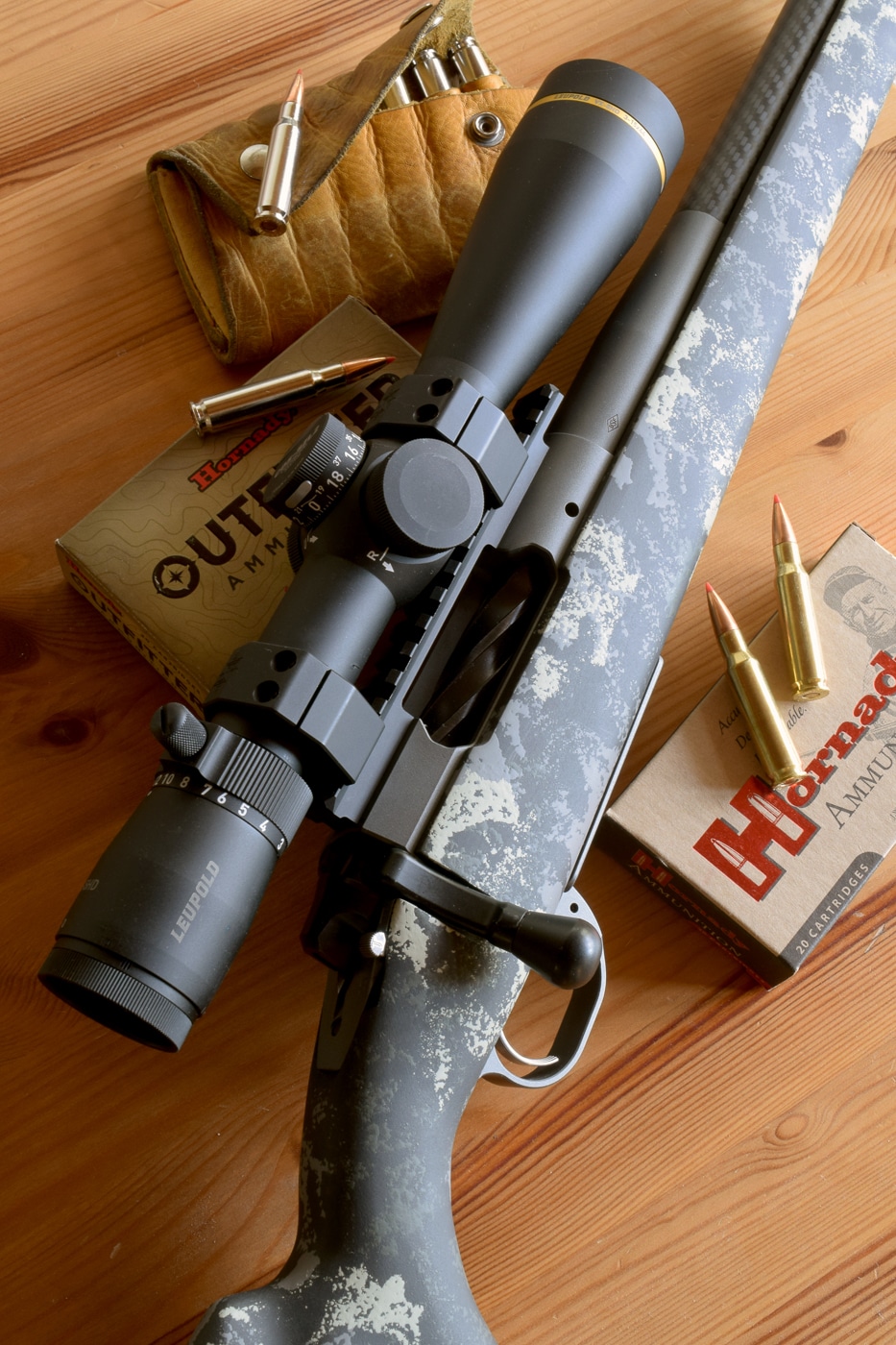
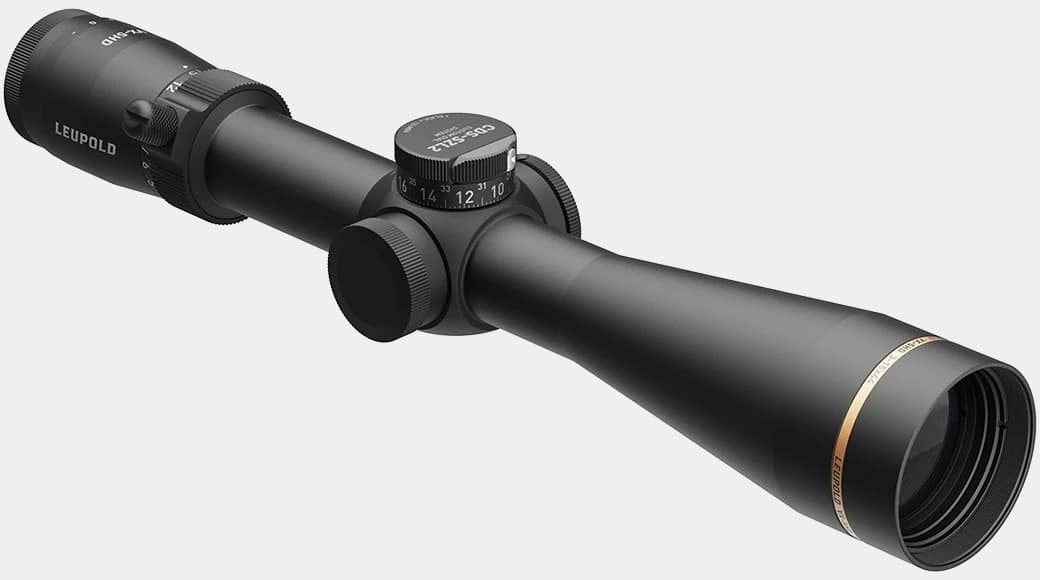
It’s not a scope but a series of scopes: 1-5×24, 2-10×42, 3-15×44, 3-15×50, 3-15×56 and 4-20×52. In addition, there are reticle options for each of these six models. All VX-5HD gen. 2s have 30mm tubes, except the 4-20xs with 34mm pipe. Besides multi-coatings that enhance light transmission, exterior lenses have “Guard-Ion” coatings to protect the glass. A zero-locking “Speedset” elevation dial lets you quickly re-set zero distance or install a “trajectory-matched” dial without tools. Reticles are in the second or rear focal plane (SFP). The illuminated reticle option (fiber optic-powered red dot) with multiple brightness settings incorporates “Motion Sensor Technology”; that is, after five minutes without a twitch of the rifle, the illumination deactivates to save battery. Movement brings it back on automatically. The 1-5×24 and 2-10×42 scopes are parallax-corrected, with fixed focus at 150 yards. The others feature what Leupold calls its “Precision Side Focus” dial on the turret’s left side — the modern equivalent of an adjustable objective, so you can zero out parallax and refine focus to the actual distance for each shot.
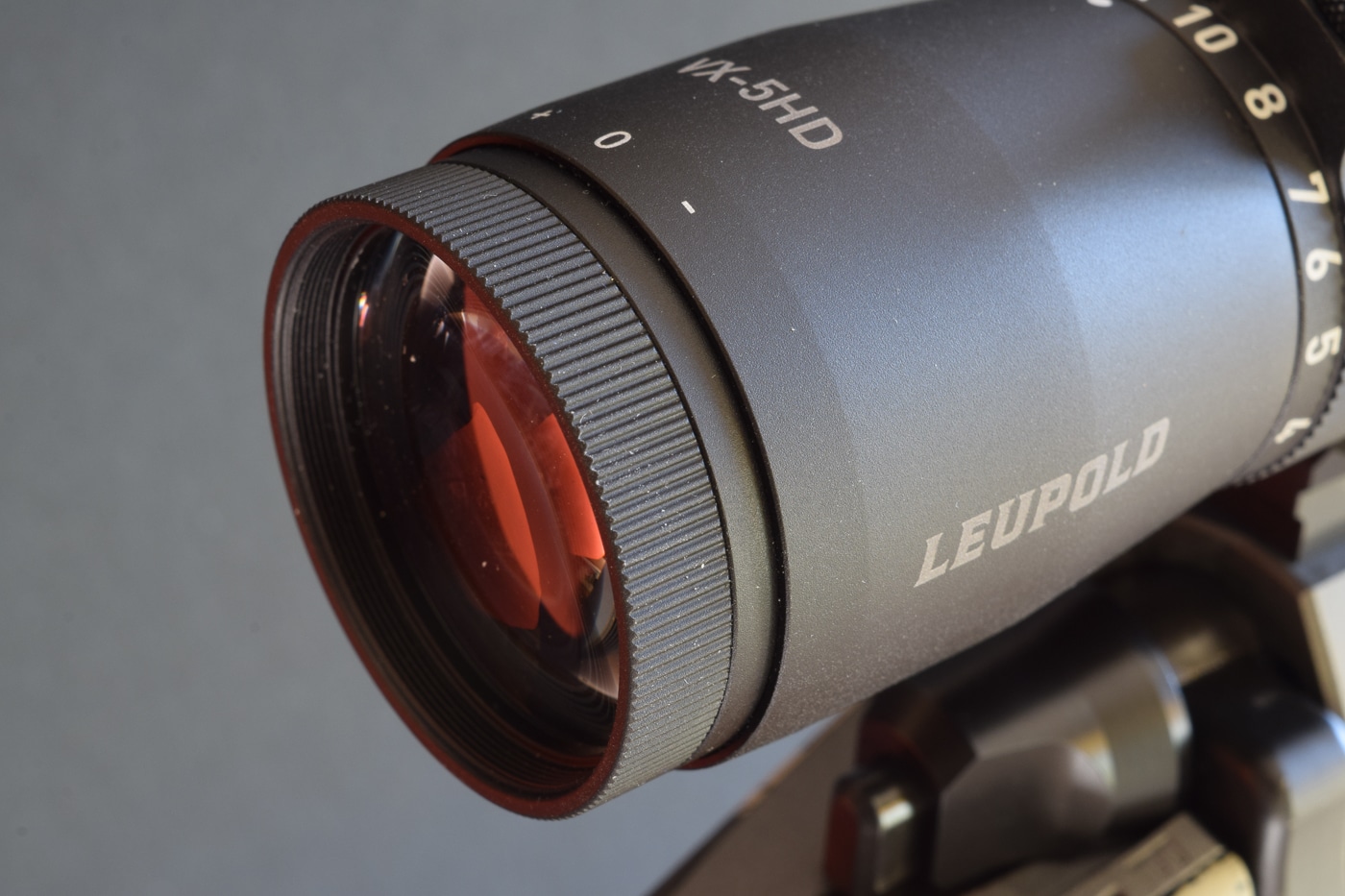
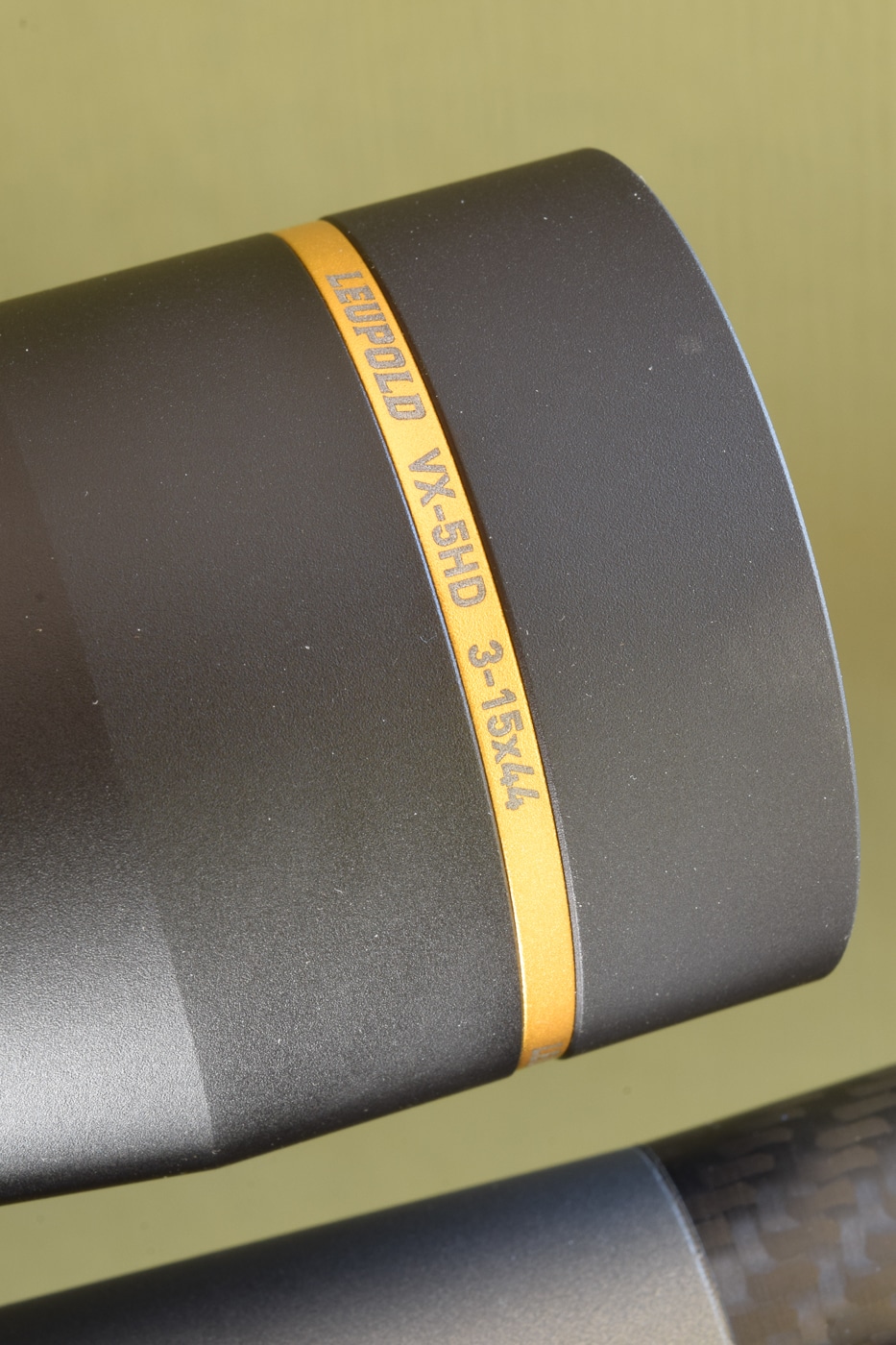
Specifications for VX-5HD gen. 2s — every detail you can think of — pop up at Leupold.com. My pick of this lot is the 3-15×44. While it offers a broader magnification range than needed on a big game rifle, the high half of the power dial is a delight on the range and for any distant target. Also, the versatility of a 3-15x range is a bargain in the VX-5HD gen. 2. Like the 2-10×42, the 3-15×44 at its lowest power setting offers a broad field for short-range, point-and-shoot pokes at deer scooting through thickets. But with half again as much magnification on its top end, the 20-ounce 3-15×44 is just an ounce heavier than the 2-10×42, and at 13 ½ inches only an inch longer. I’ve never had to use taller rings with a 44mm front lens than with a 42mm. In the VX-5HD gen. 2 series, the 3-15×42 offers more reticle options than does the 2-10×42, and its turret-side focus/parallax dial is quite an advantage. Oddly, Leupold has priced illuminated versions of these two scopes the same!


Live The Armory Life. The latest content straight to your inbox plus an automatic entry to each of our monthly gun giveaways!
As it is such an effective hunting reticle, I chose the Duplex for this scope. Illumination hiked the list price by $100. Leupold estimates its CR2032 battery is good for 1,000 hours at mid-level brightness.

Plex reticles aren’t all the same. Some outer “bars” are thick, for quick aim in poor light or dense cover; others aren’t much heavier than old-time crosswires. Fine wires in the middle likewise differ. Ditto the “window” they subtend, between the bars. I like the Duplex in this 3-15×44 — easy to see, fine enough for precise aim. Apparent “diameter” of the center wire runs from .2 to 1 minute of angle as you dial from top to bottom magnification. Bar thickness increases from .6 to 3 m.o.a. That 3-inch measure, by the way, can come in handy as a rangefinder and to estimate holdover — a benefit of high power that hunters often overlook. Apparent bar thickness in variables topping out at 8x, 9x, even 10x is typically 2 inches or less, inadequate for quick range estimates on beasts with deep chests or to gauge hold-over on 400-yard shots.
The window between bars on the VX-5HD gen. 2 is 19 to 94 m.o.a.
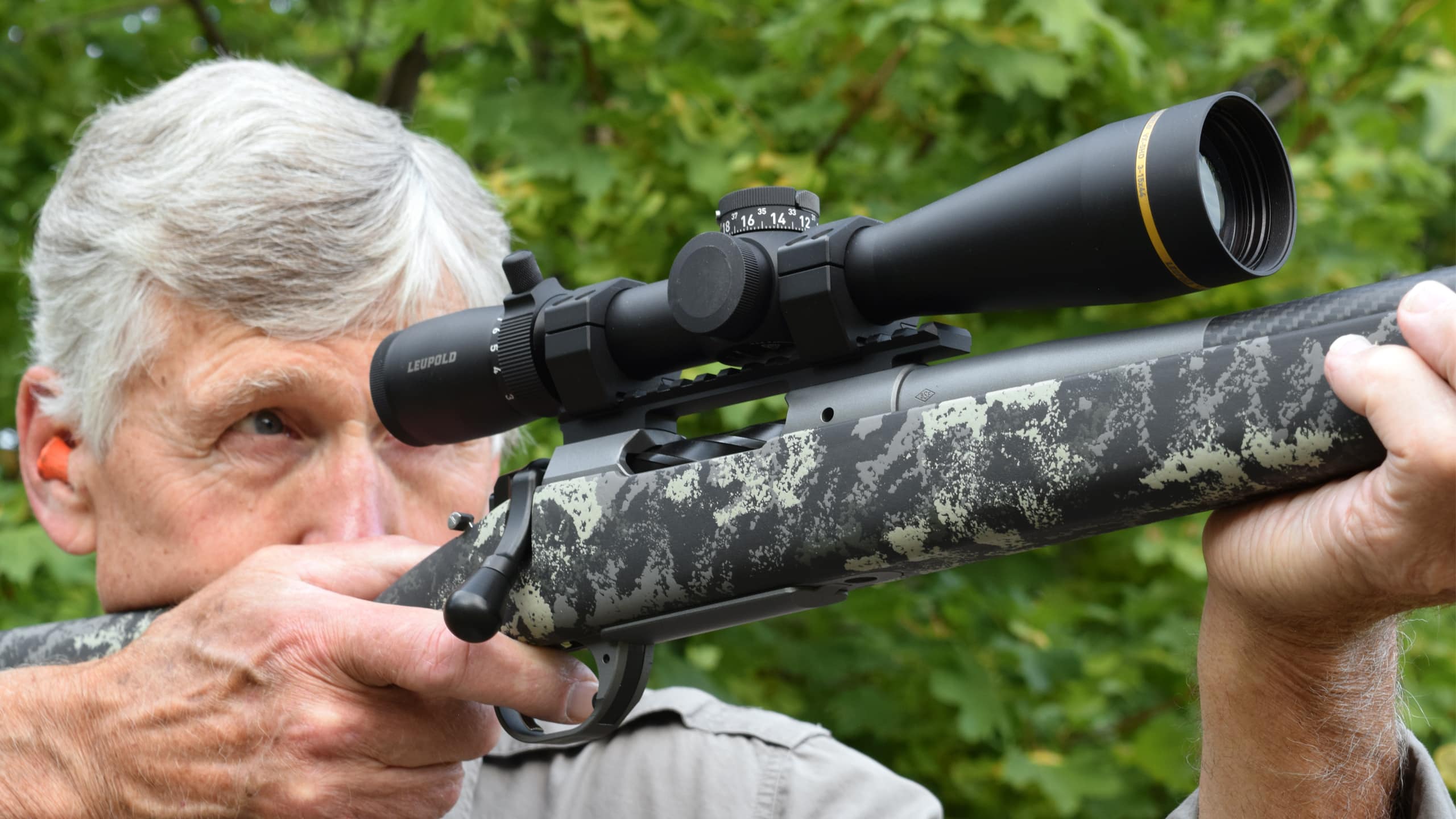
Like all Leupolds, this 3-15×44 is a cosmetic champ — elegant in form, with no extraneous bulk or projections (save the power dial’s removable throw lever). Cinched in medium rings to a lightweight 2020 Boundary rifle from Springfield Armory, it doesn’t look or feel ponderous. The comb aligns my eye with the scope’s center. Generous eye relief of just under 4 inches shrinks only 1/10 inch, low power to high. And it’s not critical even at 15x. I can move my head an inch fore and aft with no “black-out” problem.
Range Time
My Boundary rifle has proven itself with many groups shading half an inch at 100 yards; so after bore-sighting and a center hit at 100 yards, I wasn’t surprised the first group with Nosler’s new “Whitetail Country” 165-grain loads came in at 3/4 inch. My Garmin Xero C1 chronograph clocked these Solid Base bullets at an average speed of 2,674 fps from the 20-inch carbon-fiber barrel. I then checked the measure and repeatability of the scope’s W/E adjustments by shooting “around the square.” Keeping my original point of aim, I spun the windage dial 20 clicks right and fired another group, then took 20 clicks off the elevation dial and fired another group. Moving 20 left and firing, then 20 up finished the exercise. After 80 clicks, the last group printed about an inch from the first, click values averaging just over 1/4 inch. Not perfect, but closer than many rifles can shoot.
Images through the Leupold VX-5HD are brilliant, color-true and, resolution tuned with the turret dial, needle-sharp. I noticed no vignetting or color aberration, even at the rim. While some variable scopes inflict annoying field curvature at low power, this Leupold shows almost none! Like the Precision Side Focus dial, the fast-focus eyepiece spins with smooth, even resistance to suit the reticle image to my eye.
The battery slides dutifully into its left-side turret compartment. Pushing the lid’s central button illuminates the red dot in reticle’s center and adjusts its brightness across eight settings.
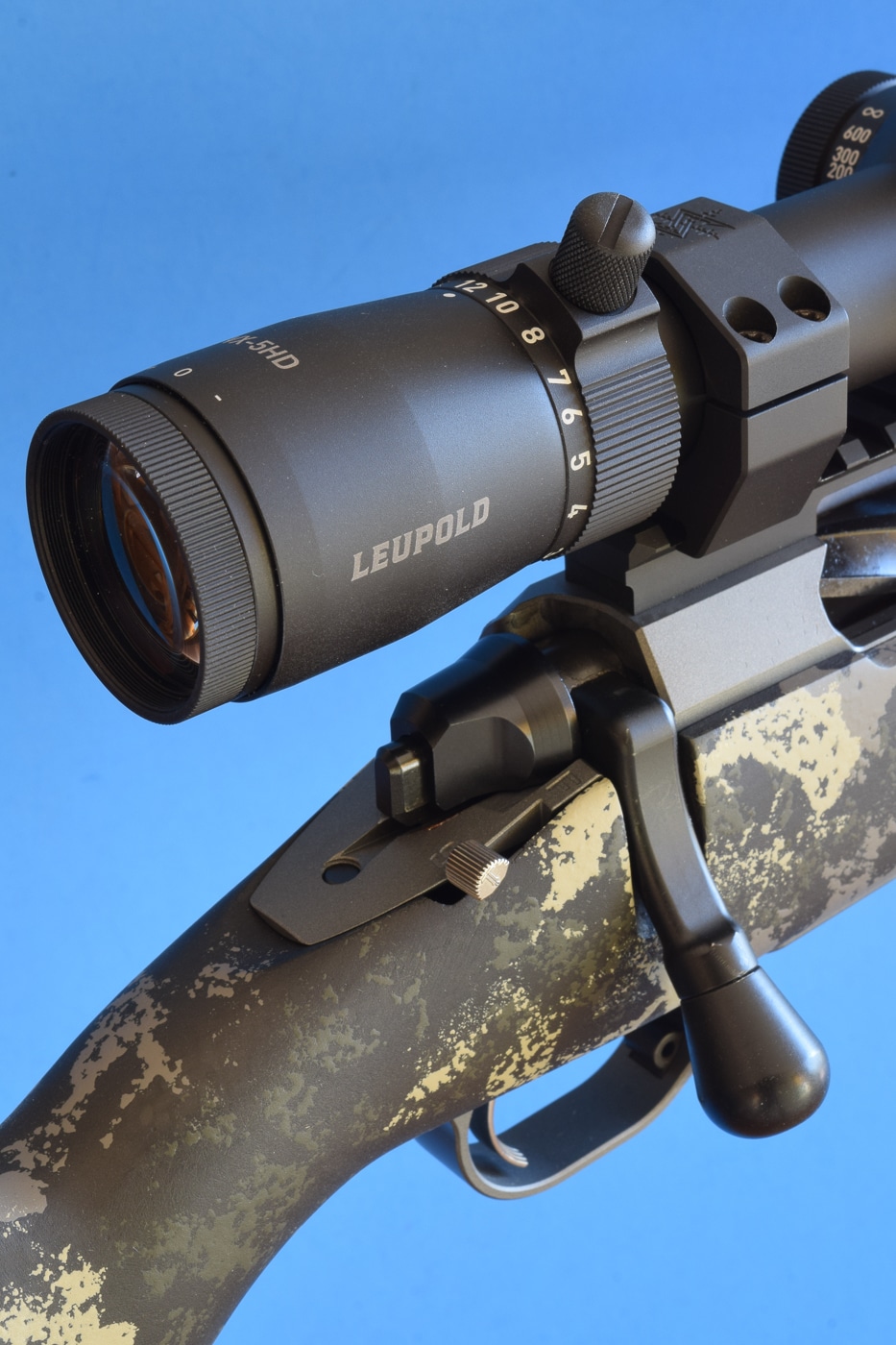
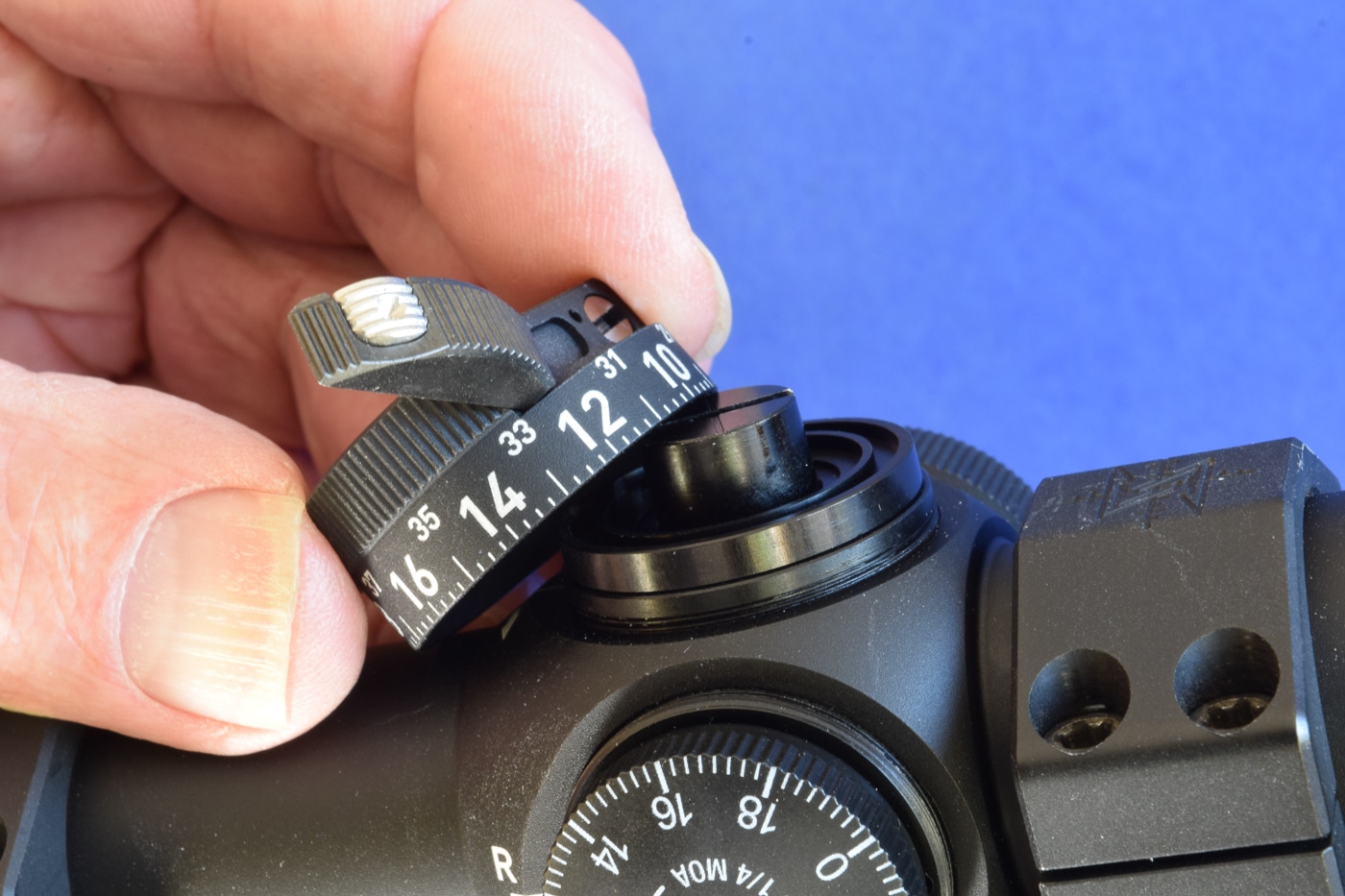
Depressing a small tab on the elevation dial frees it to rotate in positive clicks. Released, the tab locks the dial so it won’t accidentally spin. After zeroing, you can re-locate the dial’s “0” to align with the witness mark on the scope by pressing an itty-bitty button on a lever in front of the turret (the “0” facing you to the rear). You’re now able to rotate the lever almost half a turn counterclockwise. In that position, it lets you lift the dial straight up and re-position it without changing the zero. Or you can replace the dial with a “Custom BDC” dial specific to your load, so you can “dial to the distance.” No tools are needed for these operations, a boon to anyone who’s dropped a tiny Allen wrench in tall grass.
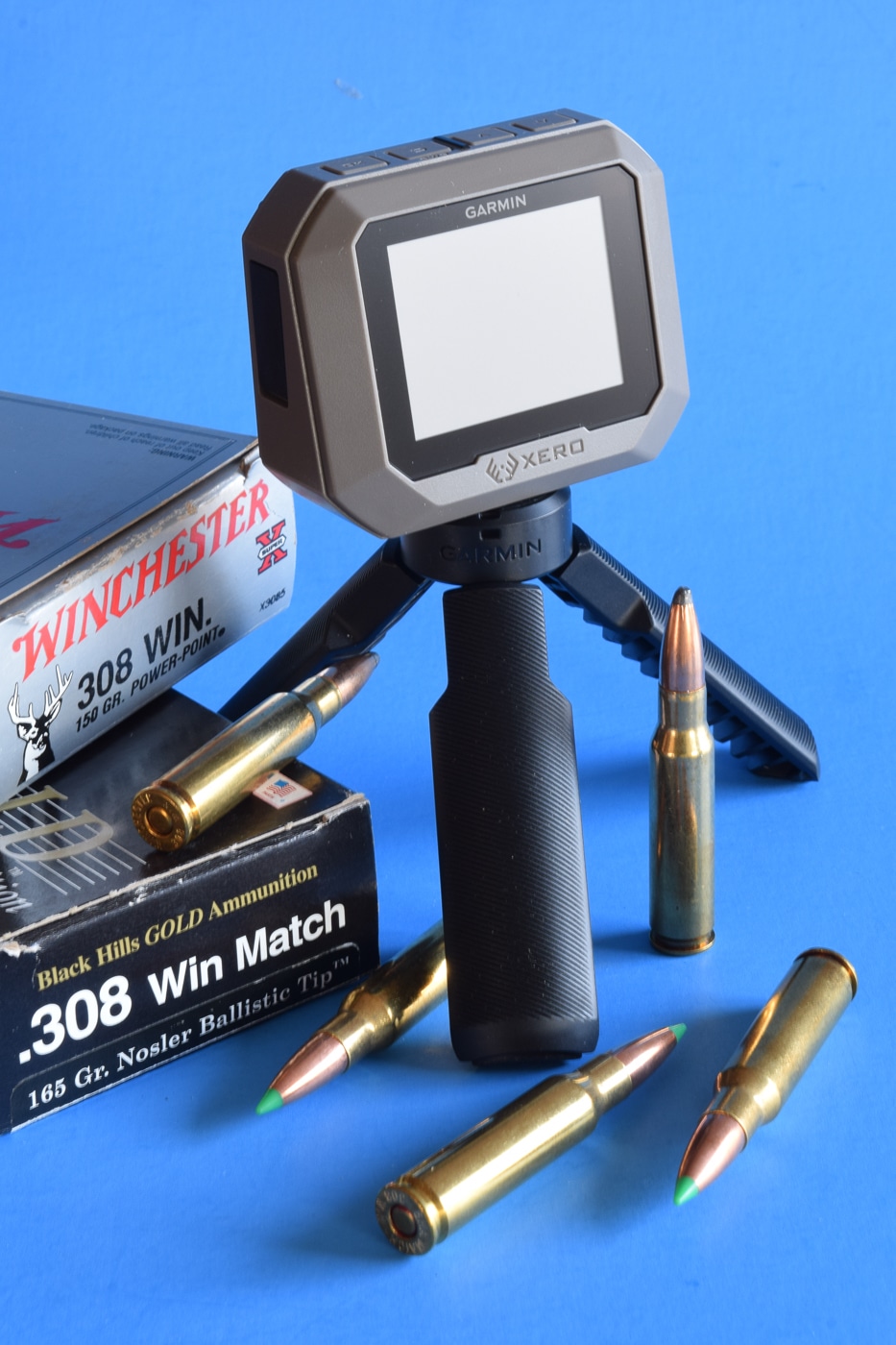
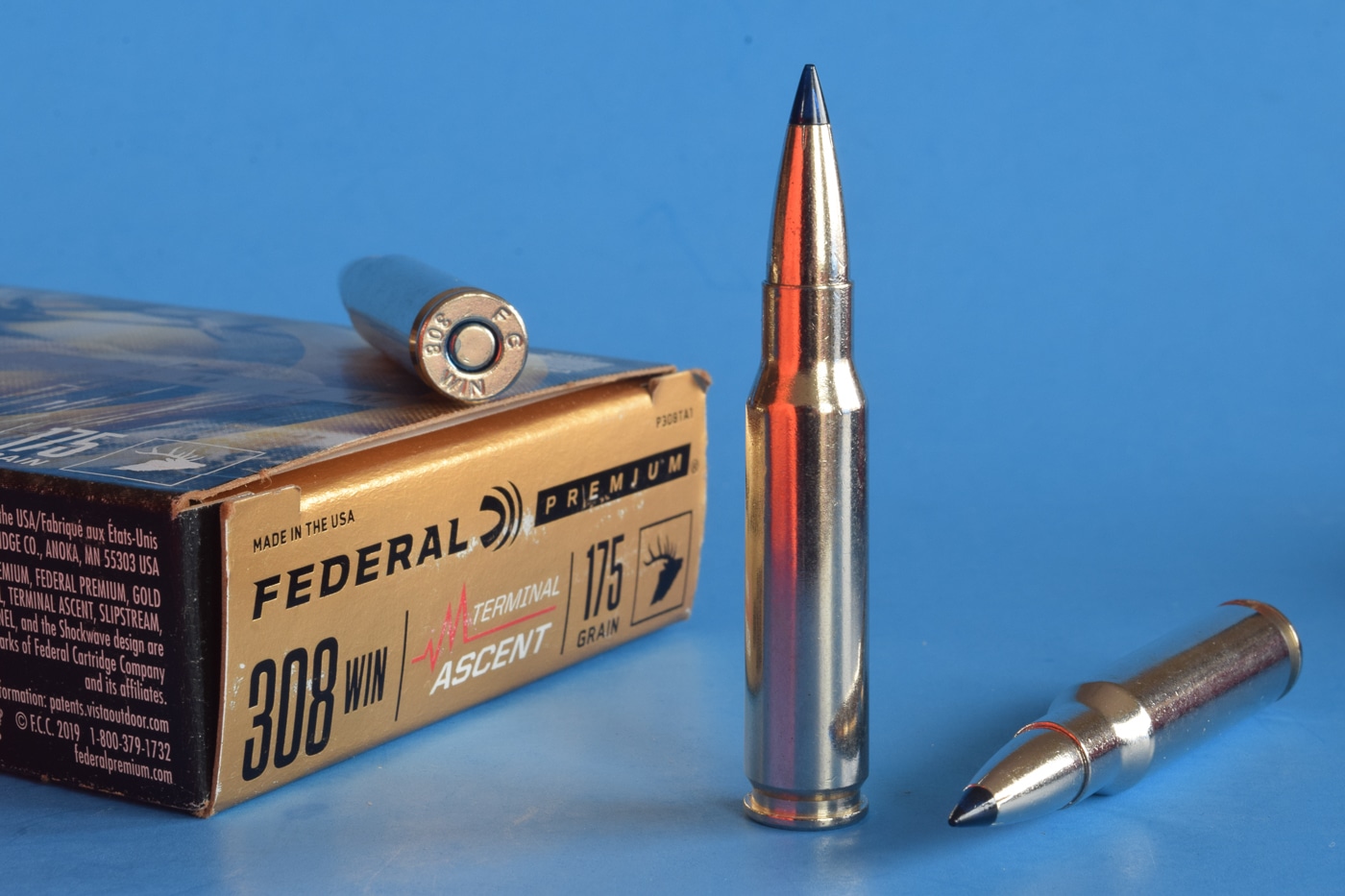
I ran several loads through the .308 Boundary to check velocities. While I’ve used many scopes, I can’t think of any that have impressed me more than the new Leupold VX-5HD gen. 2! And of the several models, the 3-15×44 has unmatched versatility. At 3x, it’s as fast a sight as any hunter could wish — faster than metallic sights, because the reticle appears in the same plane as the target. Arguably only long-range target shooters benefit from magnification much above 15x. This scope’s lovely lines, modest weight and brilliant, high-resolution optics ably complement its broad power range and clever new controls.
Conclusion
Hyperbole aside, a VX-5HD Gen. 2 is an investment worth considering, an optic to bring the best from any rifle — or shooter.
Editor’s Note: Please be sure to check out The Armory Life Forum, where you can comment about our daily articles, as well as just talk guns and gear. Click the “Go To Forum Thread” link below to jump in and discuss this article and much more!
Join the Discussion
Featured in this article



Read the full article here