




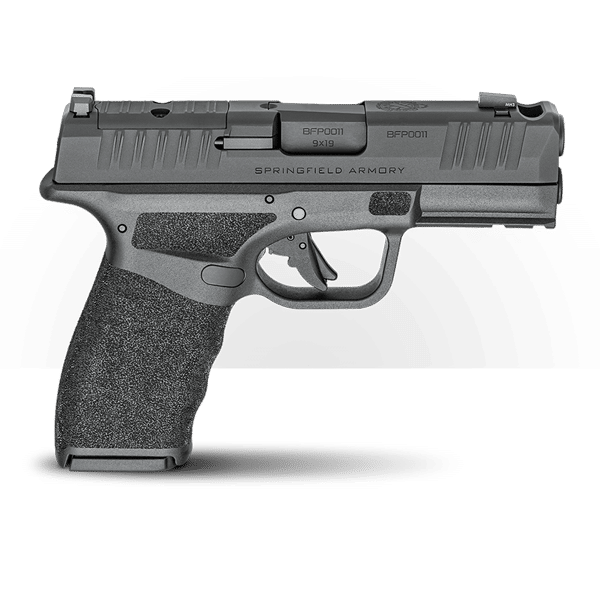
Editor’s Note: This CORD Pandora PB-K review is based on hands-on testing of the red dot sight that was provided to the author by the company. All impressions regarding durability, glass clarity, reticle performance, and mounting are based on the author’s own range time and daily carry use of the optic paired with a Springfield Armory Hellcat Pro Comp.
The compact optic space has evolved quickly — and become extremely crowded. Every year, new designs hit the market, claiming to address the same issues: durability, size, clarity, and reliability in real-world use. That’s where the Central Ohio Regional Department (CORD) PB-K Optic stood out to me.
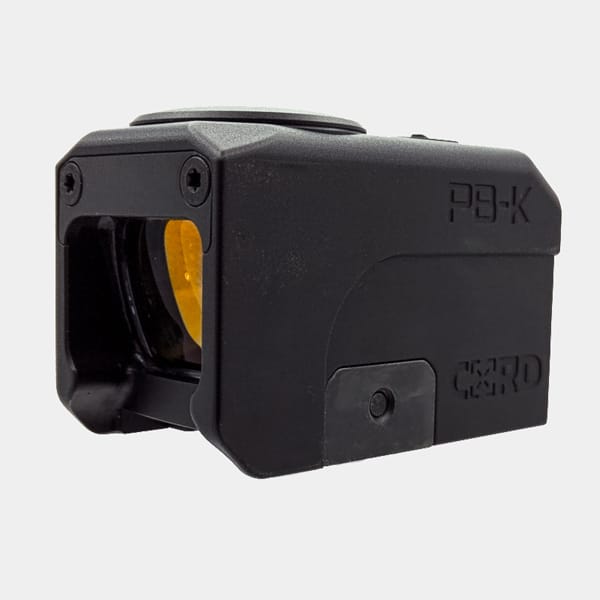
A smaller sibling to the company’s PB-3 optic, it brings a lot to the table. It’s an enclosed emitter design, has an ACRO footprint and offers multiple reticle options. But specs only tell part of the story. [Note: For additional context, be sure to read our CORD Pandora PB-3 optic review.]
There are optics that sound great on paper, and then there are optics that genuinely impress me once rounds start going downrange. After spending a while with the PB-K on my Springfield Armory Hellcat Pro Comp, I quickly realized this optic belonged in the second category.
But here’s the truth: most shooters learn that those claims don’t mean much until the optic gets put to work — so that’s exactly what I did.
First Impressions
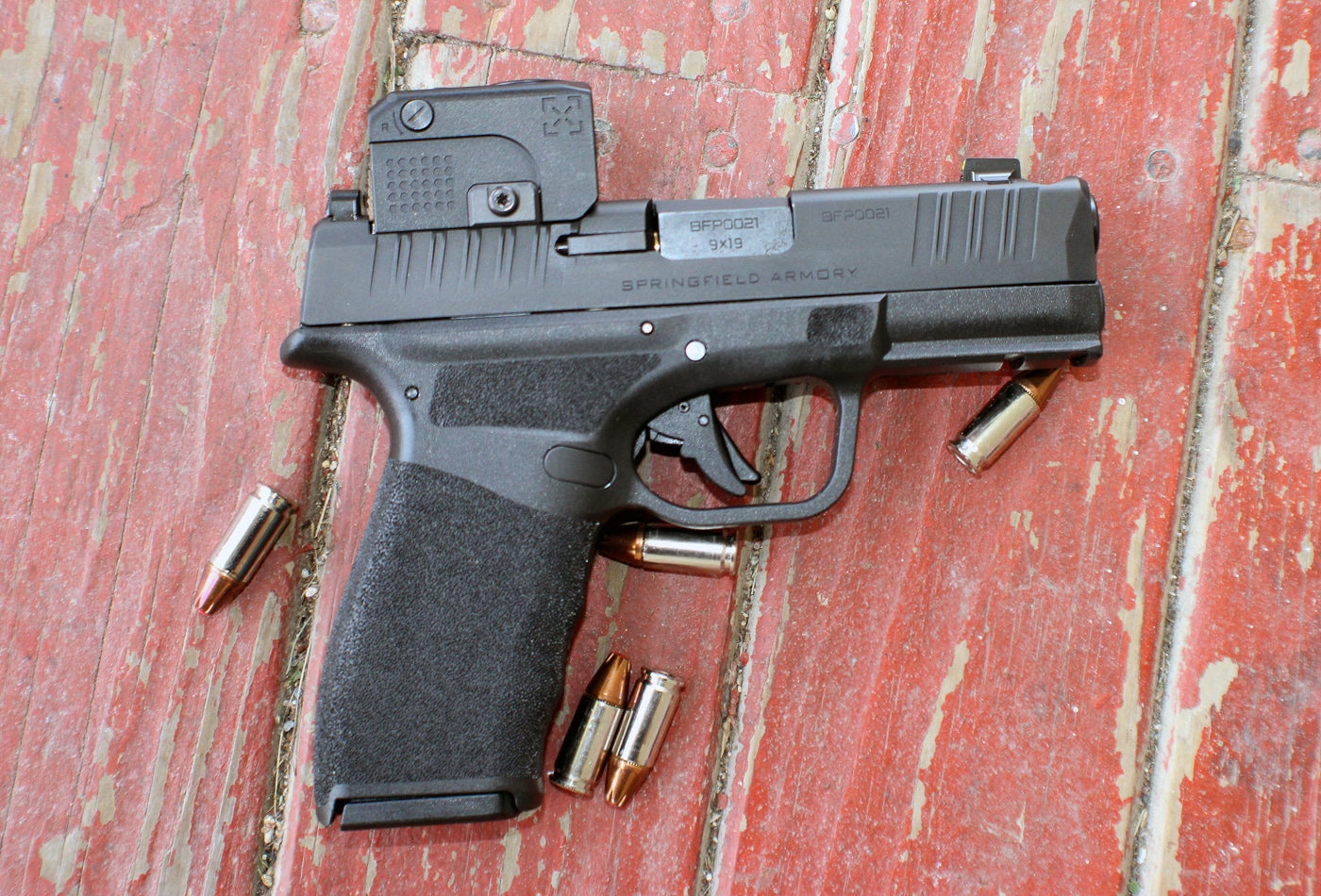
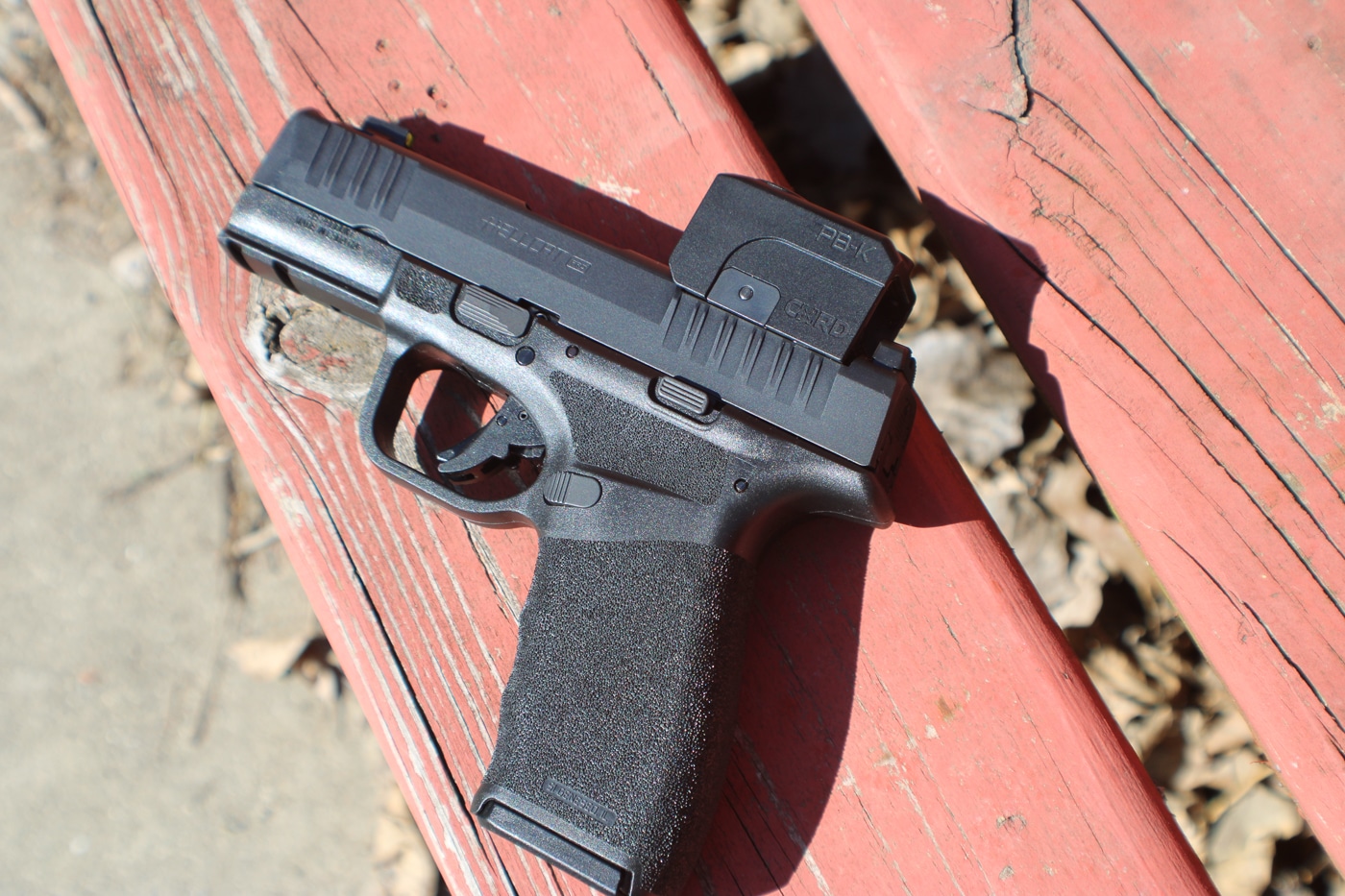
The first thing I recognized about the PB-K was how much it seemed like a natural part of the gun mounted on the Hellcat Pro Comp. Some enclosed emitter optics feel very bulky or oversized once installed on slimline pistols like the Pro. The PB-K avoided that entirely. The housing proportions felt purpose-built for concealed carry.

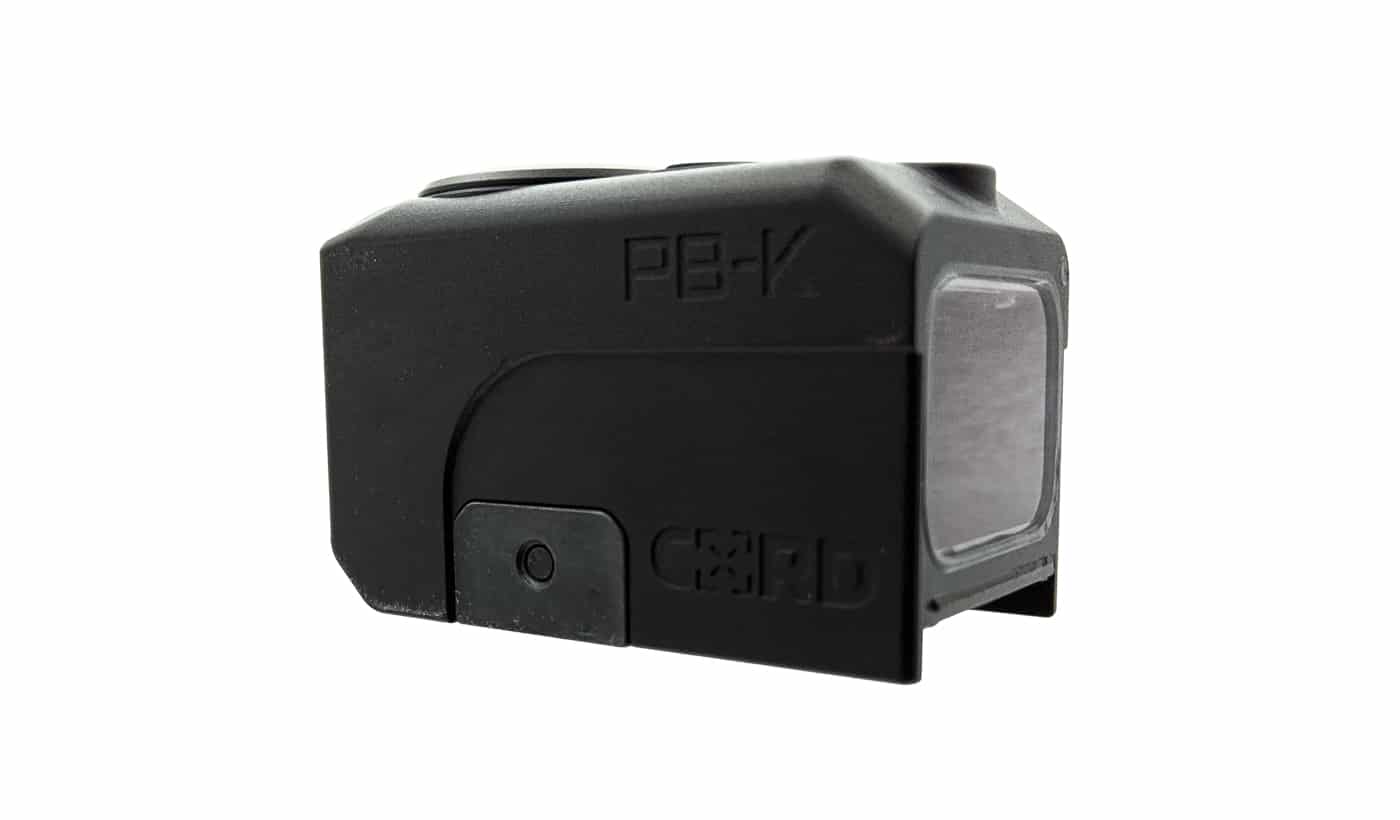
The optic maintained a compact profile without sacrificing its usability. Even during my first draw from concealment, the dot appeared naturally during presentation. I never felt like I had to search for the reticle or alter my draw to find the window.
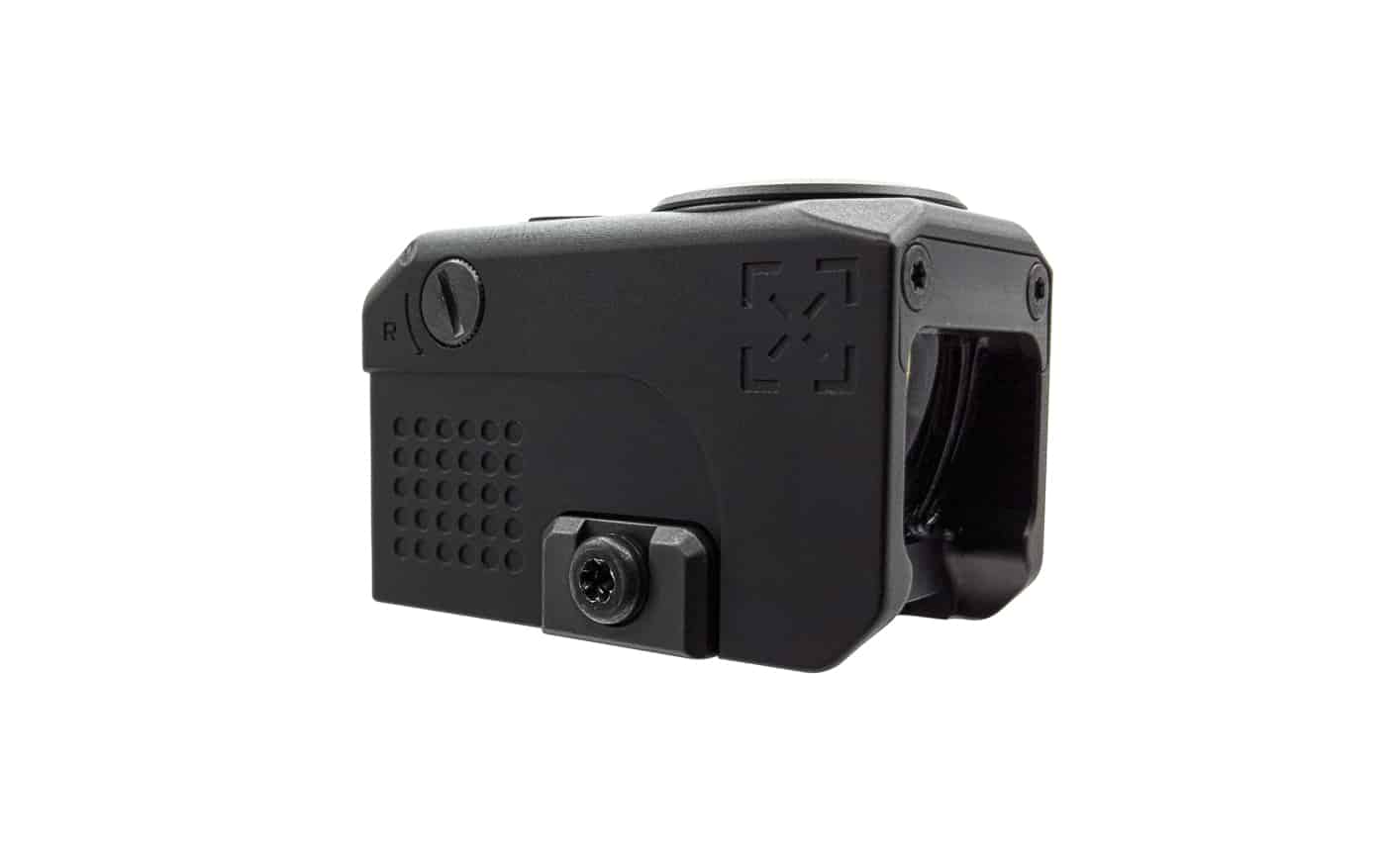
The PB-K feels substantial, and is machined from rugged 7075-T6 aluminum with an anodized finish. It really gives duty-grade vibes rather than fragile ones. Despite the durable construction, the PB-K never made my Hellcat Pro Comp feel top-heavy or unbalanced. That balance matters tremendously for concealed-carry pistols.
During my conversations with CORD about the development of the PB-K, I asked what gap they were trying to fill in the enclosed micro-optic market, and for what type of user the optic was ultimately designed.
CORD’s C.E.O., Garrett Shuck, explained that the goal was to create a compact, enclosed optic for defensive and concealed-carry use that maximized window size without adding unnecessary bulk.

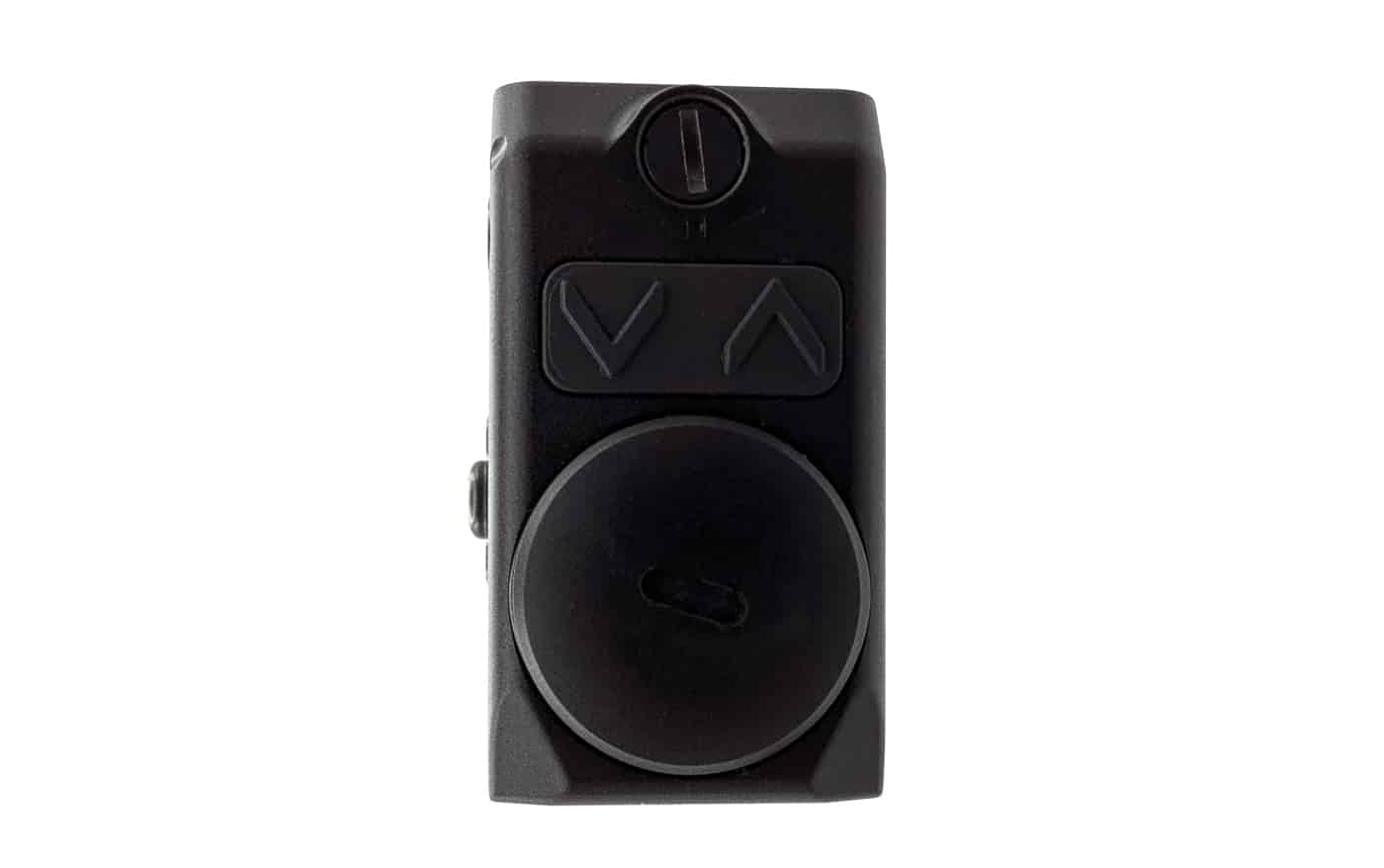
But, instead of simply shrinking a duty optic, they focused on maximizing usable glass while reducing the overall footprint. The result is an optic that trims roughly 20% of the original CORD PB-3’s housing size while only sacrificing about 10% of the usable window area.
That philosophy becomes obvious once the PB-K is mounted on the Hellcat Pro Comp. The PB-K feels compact in everyday carry while still providing a generous, forgiving sight picture during rapid shooting. Combined with the included CORD Ghost Adapter Plate system for RMSc footprints and native ACRO P2 footprint compatibility, the PB-K offers impressive mounting flexibility without compromising concealability.
[For additional information on the different mounting solutions currently on the market, read our article Understanding Pistol Red Dot Footprints.]
Mounting System
One of the most overlooked parts of any pistol optic setup is the mounting system.Yes, it may not be the most exciting thing to discuss, but it plays a huge role in how well an optic works with a gun. The way it looks and feels can make all the difference — when it’s right, the optic feels like a natural part of the gun, but when it’s not, it can be a real annoyance.

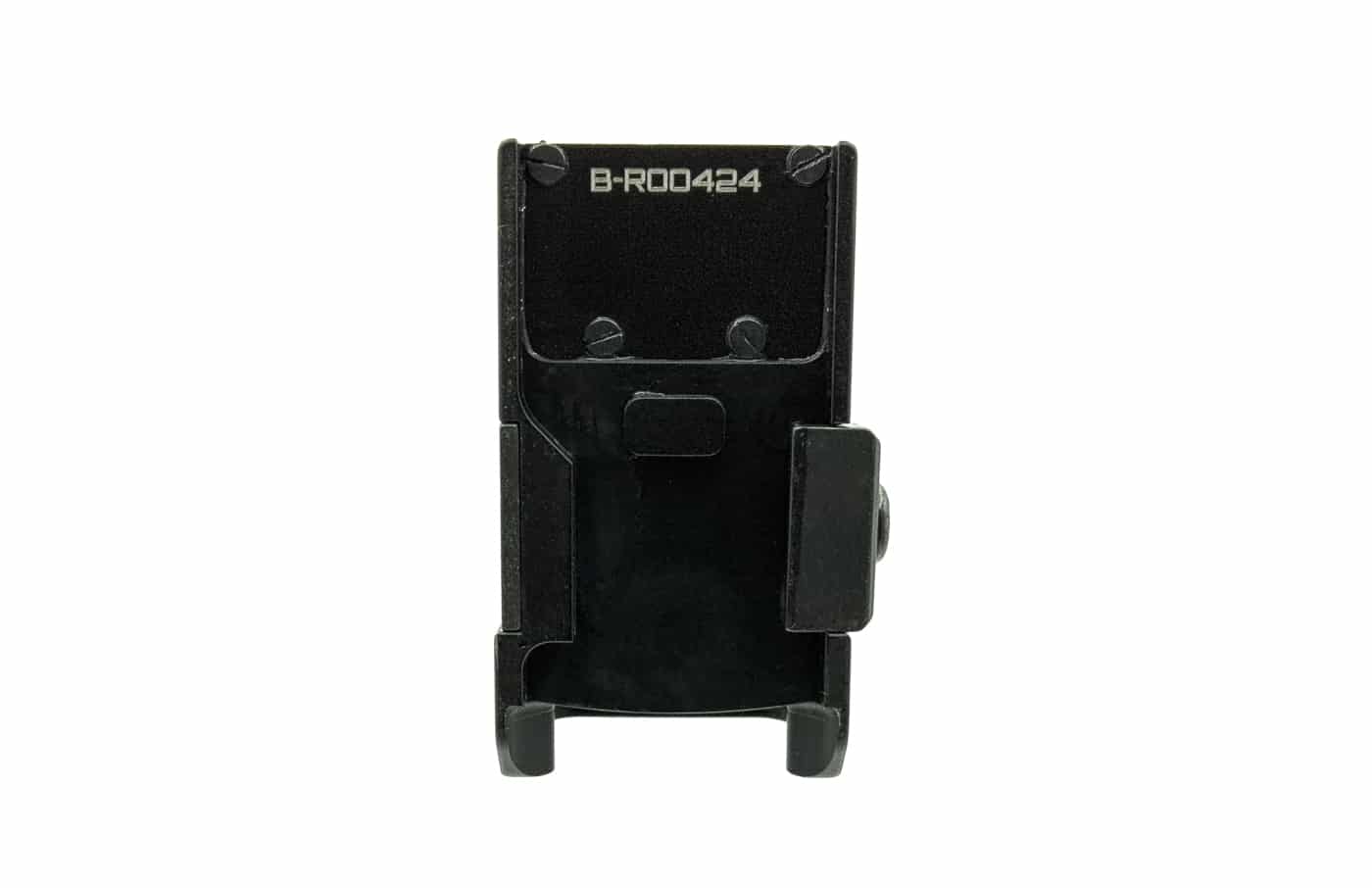
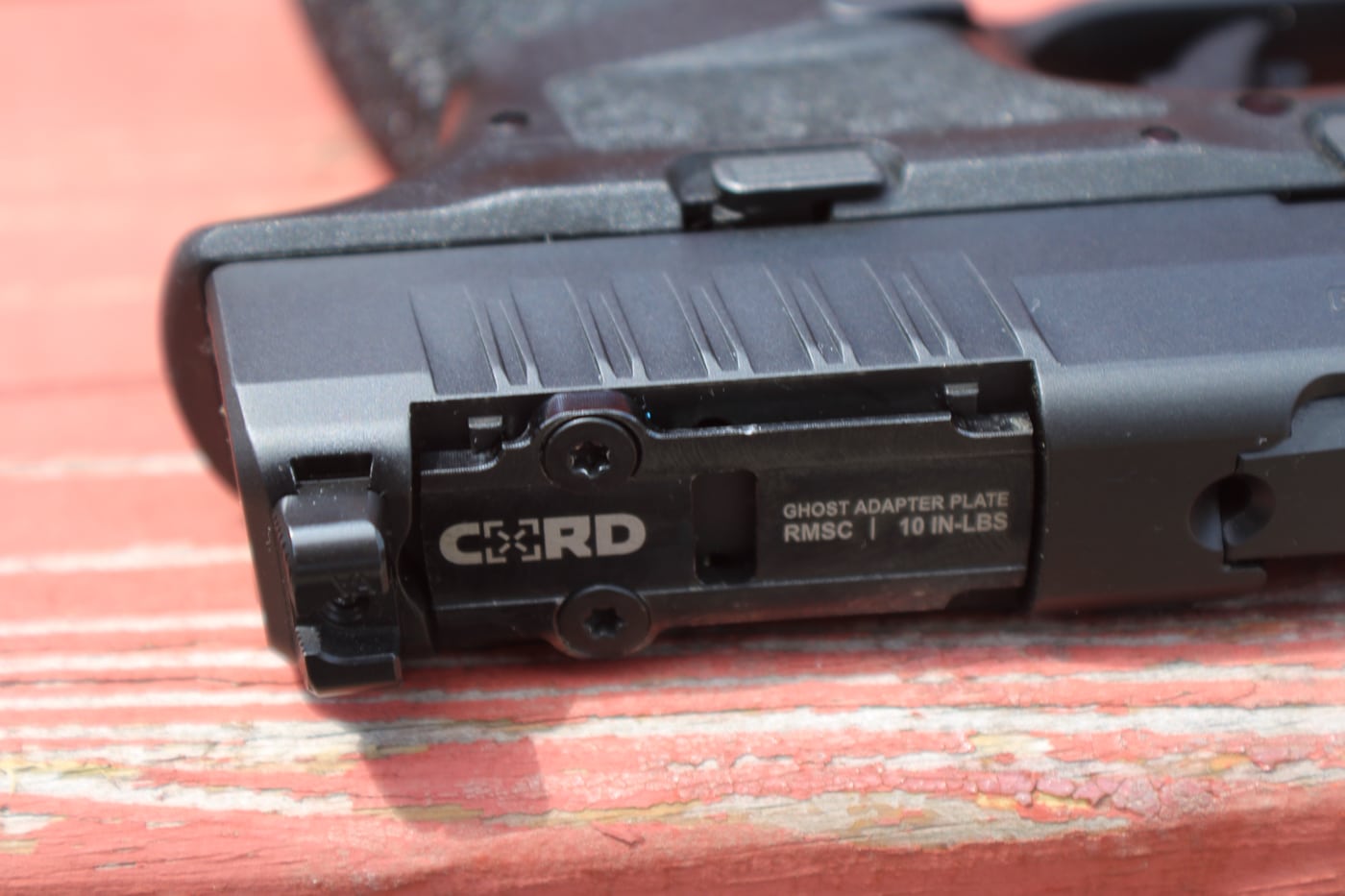
The PB-K actually comes with its own special plate, called the RMSc Ghost Adapter Plate. Let me tell you, after using it, CORD really deserves some credit.
Installation was simple. I first screwed the adapter into the screw holes designated for the optic on the Hellcat Pro (which features an RMSc-pattern optic interface cut into the slide). Next, loosen the screw on the PB-K enough to slide it onto the adapter. Once it’s in place, tighten the screw on the PB-K.


Live The Armory Life. The latest content straight to your inbox plus an automatic entry to each of our monthly gun giveaways!
This adapter is important for the PB-K because it helps keep the PB-K at a lower position. The plate places the optic lower than many other enclosed carry optics, allowing me to achieve co-witness capability without requiring an extremely tall suppressor-height sight. This lower mounting position also helps the PB-K feel far more natural during presentation and makes the entire setup feel refined instead of pieced together.
This is a big deal. Added height:
- Raises your natural sight line
- Slows down presentation
- Makes co-witnessing less intuitive
- Forces you to adjust your index
On a carry gun, that matters. Because everything is tighter. Less forgiving. There’s less room for error.
Durability
Durability isn’t proven in one range session.It’s proven over time — through repetition, through use, through small wear that adds up. After multiple range sessions, draws, and consistent carry, the PB-K didn’t give me a reason to doubt it.
There was no shift in zero. No flickering. No inconsistency. It just kept working.

And that’s what builds my trust — not performance on a perfect day, but reliability on every day after. There’s a point where the PB-K stopped being something I was testing and started to become something that I really trusted. Not because it’s new. Not because it’s trending. But because it does everything, it’s supposed to do — over and over again — without demanding my attention. That’s where the CORD PB-K landed for me.
I didn’t approach the PB-K like something I’d run for a few sessions and move on from. I approached it as something that could realistically live permanently on my Hellcat Pro. That meant it had to prove itself through repetition, consistency and real-world handling — not just backyard-controlled range sessions. It either works, or it doesn’t. And over time, through real use, the PB-K proved that it belongs in that conversation.
Glass & Clarity
The PB-K’s glass is exactly what it needs to be — clean, clear and usable. No heavy tint. No noticeable distortion. No distractions when transitioning between lighting conditions.

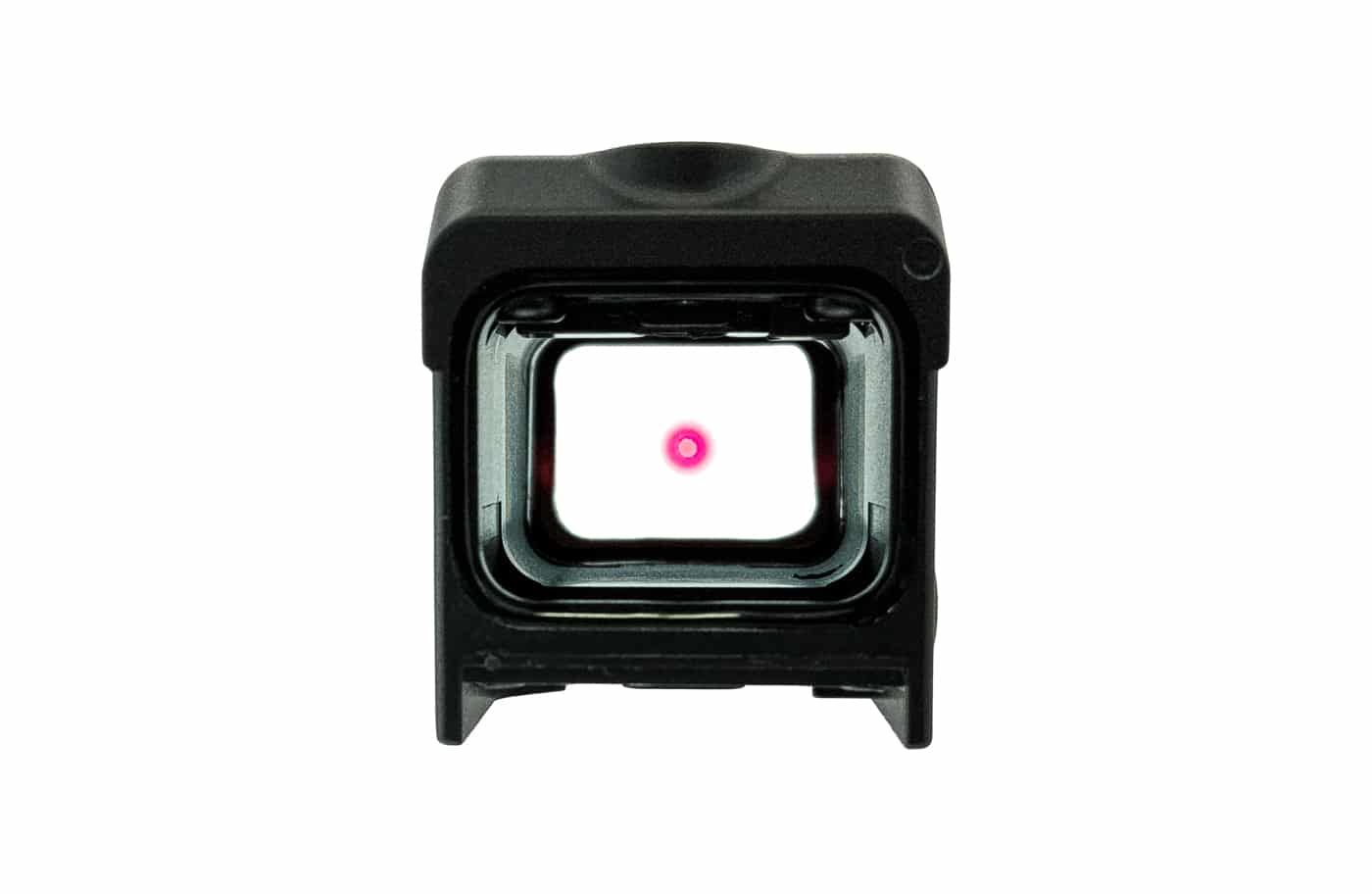
That matters more when you’re shooting dynamically because your brain is already processing recoil, movement and target transitions. The optic shouldn’t add anything to that workload. Here, it doesn’t.
It gave me a clean sight picture and helped me to stay target-focused, which is the entire point of running a red dot on a pistol. The glass on the PB-K did exactly what it should do — disappear.
Reticle Performance
The PB-K offers three reticle options:
- A 3 MOA dot
- A 32 MOA ring
- A combined dot and ring
On paper, that sounds like a feature set you’ve seen before. But in use, it actually makes sense. I spent most of my time running the circle-dot configuration, and on a compensated gun, it just makes sense.
The outer ring gives you immediate visual feedback on the presentation. It helps your eye find the dot faster, especially when things aren’t perfectly aligned. Under recoil, that ring becomes even more valuable.

Instead of tracking a small dot that can momentarily disappear, you’re tracking a larger visual reference that stays within your field of view. With the Hellcat Pro Comp keeping the gun flat, the reticle on the PB-K didn’t leave my sight — it just lifted slightly and settled back in.
That combination — flat recoil and a forgiving reticle — creates a system that felt smooth without being chaotic.
AuraWake Technology
One of the smartest design features built into the PB-K is CORD’s own Shake Awake System, called the “AuraWake” system.
Unlike other shake-awake optics that completely shut off after inactivity, CORD designed the PB-K to keep the center 3 MOA dot active at all times, while allowing the larger 32 MOA ring reticle to sleep. Once movement is detected, the outer ring instantly reactivates.

That may sound like a small feature, but it presents a very intelligent approach to concealed-carry reliability. If a motion sensor failed on a traditional shake-awake optic, the shooter could lose the reticle entirely. With the PB-K, the center dot remains constantly available regardless of time.
That type of redundancy demonstrates thoughtful engineering for defensive use instead of simply chasing marketing trends.
Range Day
I didn’t ease into this setup.
There was no slow-fire warmup. No “let me get used to it first” approach. I went straight into real work — draws from concealment and straight-to-target engagements. This is where things get honest.
On the first few draws, the circle-dot reticle immediately stood out. The outer ring makes a difference. It picks up fast, especially when your presentation isn’t perfect — which happens more often than people want to admit.
Even early on, the dot was there. Not search for it and find it eventually — it was just there.
Running controlled pairs quickly turned into pushing even faster shots, and what I noticed was simple: The dot stayed in the window. It didn’t jump erratically. It didn’t disappear. It lifted slightly under recoil and came right back to center in a way that felt predictable. And that predictability builds confidence fast.
Training with Infinity Targets
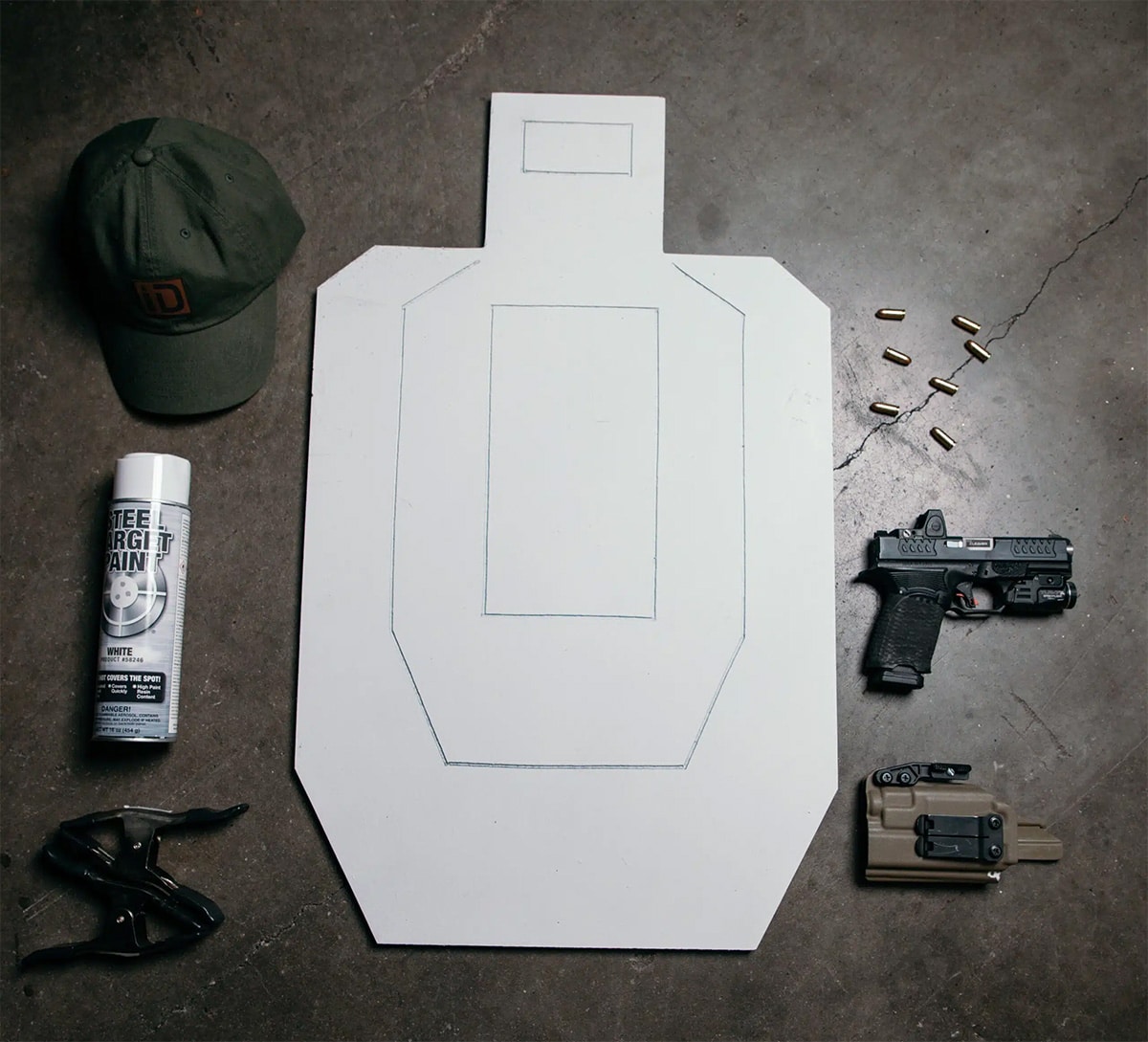
Infinity Targets played a major role throughout the range session. Their rubber target systems provided excellent visual contrast for tracking the PB-K reticle during rapid target transitions and recoil management drills.
I spent most of the session running controlled pairs, rapid transitions, one handed shooting, movement drills, and precision shots from about 15 yards.
One drill I repeatedly came back to on my Shooter’s Global Timer was the “Failure Drill”. The PB-K excelled during this drill because the reticle remained visible and easy to reacquire throughout recoil. The PB-K consistently rewarded me instead of fighting against me. That is one of the highest compliments I can give to any concealed-carry optic.
Final Thoughts
By the end of the range session, the CORD PB-K had earned my complete confidence. The optic tracked naturally through recoil, maintained excellent glass clarity, offered highly usable reticle options, and felt exceptionally durable throughout the day.
When combined with the RMSc Ghost Adapter Plate, the entire mounting system felt refined rather than compromised. Pairing the PB-K with the Springfield Armory Hellcat Pro Comp created one of the most capable and polished concealed carry setups I have run in recent memory.
Experienced shooters know that good equipment does not replace training. But truly refined gear does help to remove distractions, allowing shooters to focus on performance. And that’s exactly where the PB-K landed for me.
Editor’s Note: Be sure to check out The Armory Life Forum, where you can comment about our daily articles, as well as just talk guns and gear. Click the “Go To Forum Thread” link below to jump in!
Join the Discussion
Featured in this article



Read the full article here