

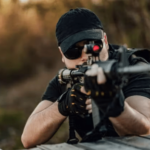
“Cheap skills” are one of the quiet traps that catch shooters who believe they are doing the right thing simply because they occasionally show up at the range. The phrase sounds harsh, but it describes a very real phenomenon: nominal skills built quickly, casually, or without standards.
The shooter feels good about passing a casual test. They might even meet a qualification requirement. But under duress, time pressure, fatigue, layered complexities, or the knowledge that consequences are real—those skills fold like a lawn chair.
The Beginning
The problem begins with how most people perceive training. Many shooters treat practice as an occasional activity rather than a disciplined process. They show up whenever, run a few magazines through the gun, maybe shoot a familiar drill, and leave feeling like they have “trained.”

The experience can be fun and reassuring. Targets have holes in them, the firearm functioned, and nothing obviously disastrous occurred. From the outside it looks like progress. From a performance standpoint it often produces something very different: barely adequate competence held together by favorable conditions.
Skills built this way are fragile. They depend on everything being environmentally optimal. The lighting is good, the pace is comfortable, and the shooter has plenty of time to think. Under those conditions the average shooter can produce respectable hits, and the illusion of competence grows quietly.
Unravelling
Pressure exposes weakness. Introduce a timer, add movement, or increase cognitive load and performance starts to degrade. These failures are not mysterious. They are the predictable result of skills that were never built to withstand pressure in the first place.

Professional shooters, instructors, and high-level competitors all converge on the same definition of skill: on-demand performance. Not something you pulled off once when conditions are perfect. Durable skill exists only when it is repeatable across time and stress. If it cannot be reproduced reliably, it is not yet a skill. It is an event.
Anyone can catch lightning in a bottle once. True competence is evidenced by consistency. The shooter who can run the drill correctly 10 times in a row demonstrates something real. The shooter who succeeds once and fails the next five times reveals a different truth: the skill is not yet earned.
(Un)stable Foundation?
Cheap skills thrive on minimum standards. From a bureaucratic standpoint that may be sufficient. From a performance standpoint it removes any margin for error. Minimum standards create maximum failure because they leave no buffer. When stress inevitably degrades performance, the shooter falls below the threshold. This is why professionals pursue something very different: surplus skill. Instead of aiming to meet the requirement, they aim to exceed it by a wide margin.

Surplus skill is your insurance against the realities of performance degradation. Stress does not politely ask permission before it reduces capability. When it’s gametime, heart rates increase, attention narrows, and wheels begin to wobble. These effects are predictable and unavoidable.
When a shooter has built surplus capability, degradation leaves enough performance to remain effective. When the shooter trained only to the minimum, the same degradation pushes them below functional competence.
Another contributor to cheap skills is sloppy reps. Such shooters perform drills quickly without paying attention to the repetition quality. Misses are ignored. Mechanics loosen. Visual focus degrades. The shooter is primarily concerned with finishing the drill rather than executing it correctly. Over time those sloppy repetitions become ingrained.

Live The Armory Life. The latest content straight to your inbox plus an automatic entry to each of our monthly gun giveaways!
We humans are exceptionally good at wiring whatever we repeat. The nervous system does not distinguish between correct and incorrect execution. It simply strengthens the patterns it sees most often. If the majority of repetitions are sloppy, rushed, or inattentive, the shooter is literally training those errors into the system.
This produces false confidence. The shooter has spent many hours on the range and therefore feels experienced. The volume of practice creates emotional reassurance. Yet the underlying mechanics remain inconsistent. When performance is finally tested under meaningful conditions, the confidence disappears quickly. The skill was never truly there.
The Right Way
Professional shooters approach repetition differently. They treat every repetition as an opportunity to reinforce correct mechanics. If the rep is not clean, it is not accepted. Errors are addressed immediately rather than ignored. The goal is not to complete a drill sloppily but to build reliable motor patterns that will hold up under pressure.

This process is slower than casual practice, which is one reason many shooters avoid it. Enduring skill requires discipline and patience. Fundamentals must be revisited repeatedly. Small technical details must be constantly refined. Progress can feel incremental, even tedious. Yet those small refinements accumulate into something durable.
Durable skill has another characteristic: it survives bad days. Everyone experiences fluctuations in performance. Sleep, stress, fatigue, and countless other factors influence how a shooter performs on any given day. Cheap skills only function on good days. Durable skills continue to function throughout variable conditions.
Accountability is the dividing line between shooters who build enduring skill and those who accumulate cheap skills. Performance shooters measure the results of their performance over time. Weaknesses are identified and addressed rather than ignored. The process can be uncomfortable because it exposes areas that need real work, but that discomfort is exactly what drives improvement.
Conclusion
Another factor often overlooked is maintenance. All skills are perishable. What is not practiced regularly will degrade. Shooters who train infrequently may remember what they once could do, but memory is not performance. The nervous system requires ongoing reinforcement to maintain high-level execution. You’re only as capable as your last training session.

Cheap skills are comfortable because they require little effort and produce quick reassurance. Surplus skill demands discipline, patience, and relentless attention to detail. It is not for everyone. It is for those who take performance seriously.
When conditions deteriorate in the real world—whether in combat or competition—the shooter will not rise to the level of their optimism. They will fall to the level of their most recent training.
Editor’s Note: Please be sure to check out The Armory Life Forum, where you can comment about our daily articles, as well as just talk guns and gear. Click the “Go To Forum Thread” link below to jump in and discuss this article and much more!
Join the Discussion
Read the full article here