


Editor’s Note: This article describing the citizen first responder is presented for discussion purposes. Know and follow your jurisdiction’s laws regarding self-defense, and ensure that anyone rendering aid is qualified to do so. Seek competent training from qualified instructors.
A common definition of a first responder is a person who has specialized training and is among the first to arrive and deal with an emergency. Frequently counted in this group are law enforcement, fire rescue, and emergency medical services personnel. A broader accounting could include medical staff, pilots, the military, and public works personnel.
But the real distinction between a first responder and a Good Samaritan is the level of preparedness and training. While any person can be a helpful volunteer in a dangerous situation, a true first responder must have attributes that can more assuredly lead to a successful outcome.
Right off the bat, obviously, you should avoid danger and conflict whenever possible. Unless it’s an unavoidable threat, your best course of action is always to avoid conflict whenever possible.
But what about if you are truly facing a deadly and unavoidable threat? How can you be best prepared? On the other hand, what if you are facing a non-threat emergency? Are you prepared for that possibility as well?
Simply carrying a firearm, flashlight, and a fixed blade do not necessarily make someone an effective problem solver. I can think of five areas in which functional knowledge can increase the chances of a positive result in most foreseeable critical incidents.
Situational Awareness
About 10 years ago, I was driving to the East Coast of Florida for a training seminar. On I-95, I was caught in a backup about a mile from my intended exit. Creeping forward, I saw a multi-vehicle crash…but no blue and red lights! People were injured. Obviously, I had to do something. Situational awareness was mandatory. Also, I am a trained law enforcement officer, so please keep that in mind.
The immediate lifesaving considerations were traffic dangers, fire/hazmat potential, and triaging the injured. Multiple folks were on cell phones with 911. I blocked the southbound median lane with my vehicle and asked some northbound construction workers to do the same with their F-350 and cones. Vehicles were now guided away from the accident site.

Fluids leaking from the crashed cars and a pickup truck were mostly antifreeze and automatic transmission fluid, but there was little fuel. Nothing was on fire. No placarded vehicles or suspicious cargo were present. Second objective, check.
One man had a broken arm but was being attended to by family members. There were various minor wounds in northbound traffic, but the most serious injuries were to the driver of the SUV that had jumped the center guardrail and rolled over into southbound traffic. She had been ejected and was unconscious.
I had my trauma kit as I approached several bystanders around her. She was supine on the pavement. I moved in to ask a civilian to stabilize her cervical spine when a lady dashed up and said, “I’m an ER nurse.” Thank God. I gave her my trauma kit.

After about 15 minutes on the ground, I heard the siren of a Fire Rescue engine. More fire apparatuses arrived, followed by the Florida Highway Patrol and city police officers. I pointed the cops to several independent witnesses, gave them my business card, and let them go to work. My hands shook slightly as I resumed my journey. Whew.
Fortunately, my training kicked in, and I was able to prioritize the dangers to the most people in the area. Unpredictable traffic, fire, and potential hazardous materials need immediate attention, after which came assessing the injured. Scene safety comes first. Situational awareness is key, no matter what problem exists. Fortunately, I had the skills and training to respond when needed.
Medical Training
Many of us carry trauma kits in our vehicles or on the range, but have we practiced with the items within? I am a strong proponent of some form of the U.S. Department of Defense’s Tactical Combat Casualty Care (TCCC) training for everyone. TCCC, said “Tee-Triple-Cee,” is self- and/or buddy care either under fire or in a tactically de-escalated environment. The MARCH acronym for Massive Hemorrhage, Airway, Respiration, Circulation, and Hypothermia addresses threats in descending order.

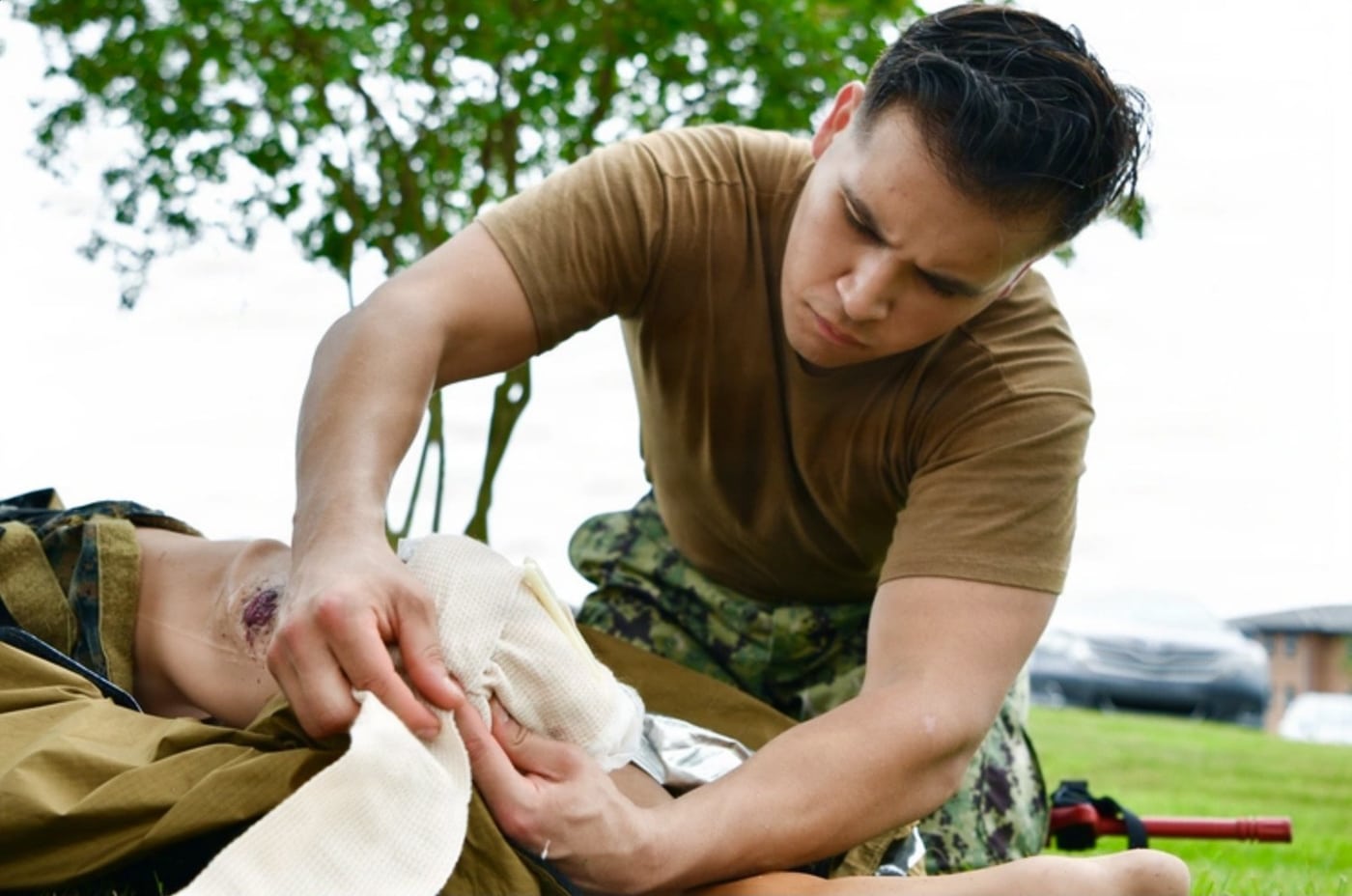
My TCCC instruction came via our own SWAT fire-rescue paramedics. While it started there, it expanded several years later to all our police officers. Having a hefty hose handler yelling at you that you are down with an upper left leg GSW and to get your tourniquet tight is daunting. And he or she will continue shouting at you to get your tourniquet on high-thigh, and now, now, now!
The Stop the Bleed program was created by the U.S. Department of War to take the TCCC concepts and “empower ordinary people to save lives by controlling severe bleeding.” Any licensed instructor teaching under this program is using an approved curriculum that teaches the three standard techniques: direct pressure, wound packing and tourniquet application. You can find out more about the training including available classes here. Many courses are free and take only an hour.
Tactical Considerations
To shift gears, tactical training is lifesaving in other circumstances. I have covered some of the most common types in my earlier TAL articles about Deadly Dangers of Gun-Free Zones, Surviving a Home Invasion, Proper Room Clearing Tactics, and Approaching a Dangerous Vehicle.
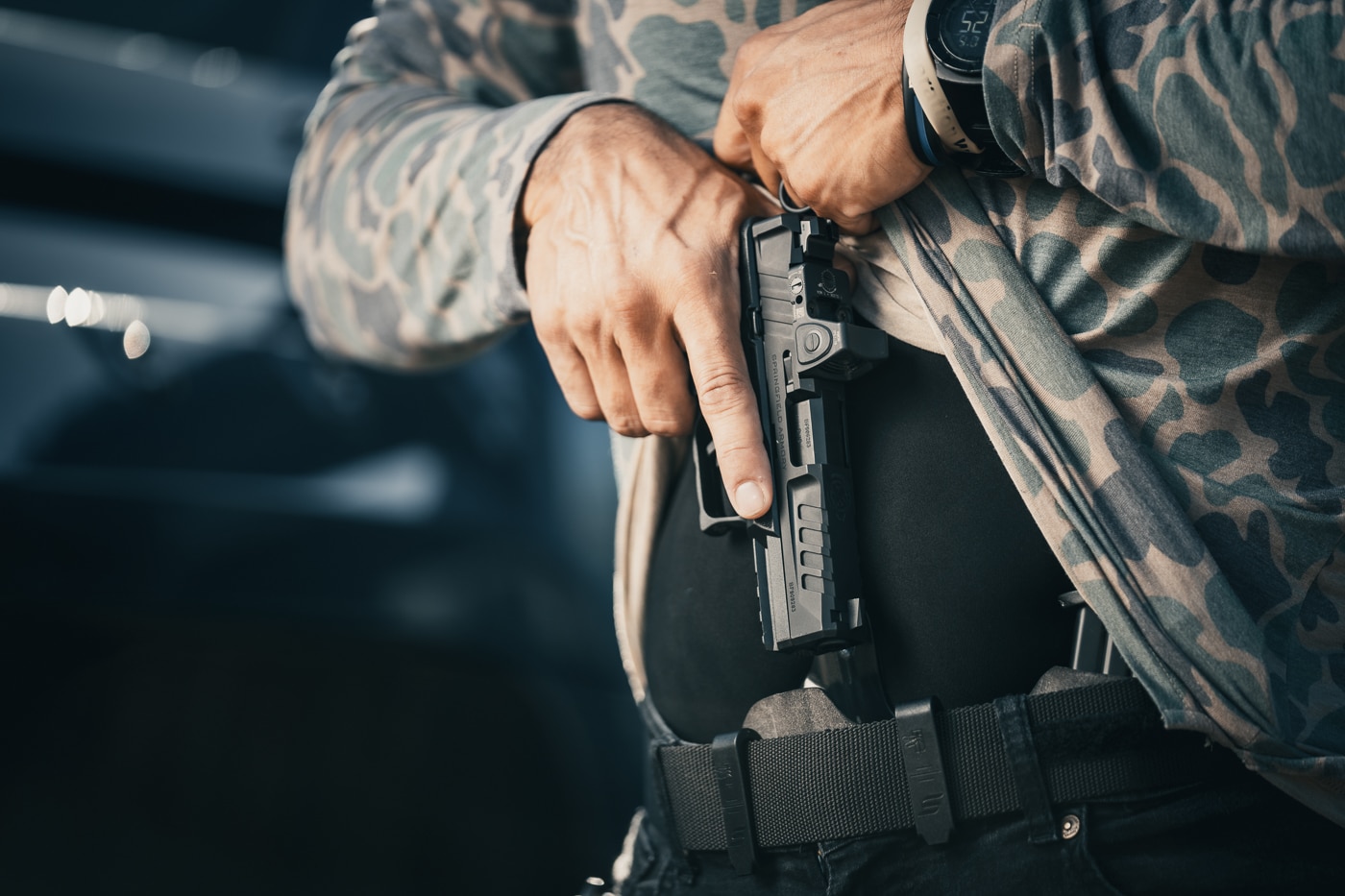
Say you have a firearm and there is an unavoidable threat. What do you do? Be aware that you will not have a uniform to identify yourself as a good guy. Someone running around with a firearm in jeans and a T-shirt at an already heightened scene may draw confrontation from the authorities and other armed citizens. Decide when to be discreet or when to verbally announce your intentions to help.
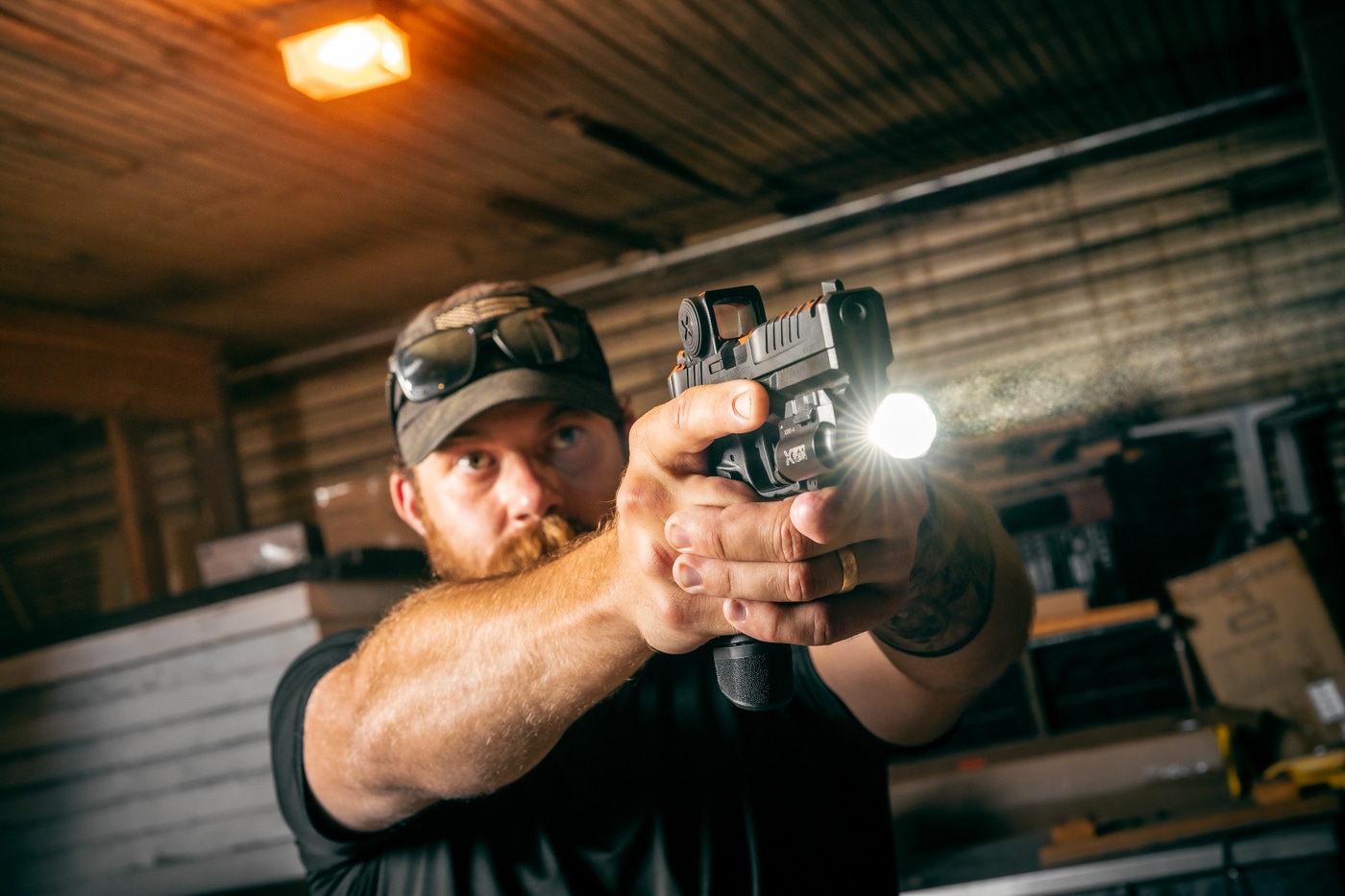
Knowing how to move safely in the real world is different than on the square range. Muzzle discipline and target identification must be practiced together to keep you and others out of harm’s way. In SWAT, we did repetitions in a shoot house, although we spent 99% of our time “out of the holster” on life-or-death operations.
In over 20 years and hundreds of missions in my time on the team, we had only one negligent discharge. An officer stumbled and accidentally fired their weapon during a warrant search. They had the sub-gun pointed toward the rafters and only killed a roof truss. The safety was off since the element was active in the same crawlspace as the armed suspect. Still, it was a sober lesson in not lasering your teammates.
Since you will not be on the range during a real emergency, your backstop will not be a berm or baffle but could be live human beings. You cannot afford to pull the trigger at the wrong time. Discipline is mandatory.


Live The Armory Life. The latest content straight to your inbox plus an automatic entry to each of our monthly gun giveaways!
There are great schools that will give you sound tactical training in cover and concealment, movement, cornering, light and noise discipline, teamwork, target acquisition, failure drills, and firearms proficiency. Please do your research and seek them out. Practical lessons are the only way to learn and be safe. The internet is in no way a training ground. “Don’t hit subscribe.”
Equipment Choice
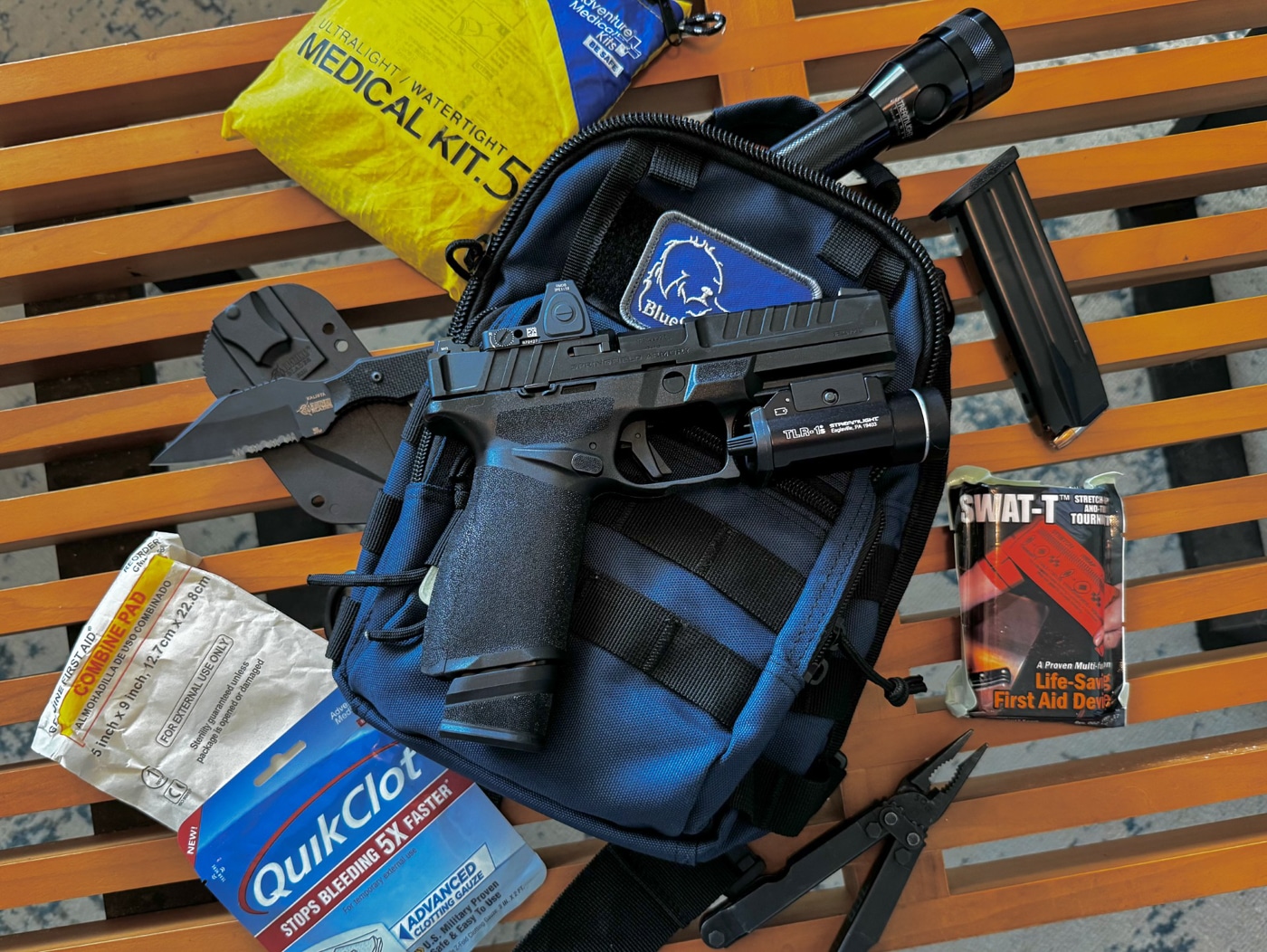
Depending on the nature of the emergency, a firearm, medical kit, and rescue tools are your basic requirements. The trade-off is that everyday carry and full preparedness are vastly different. Because you should have an idea of the reasonable threat levels where you travel, it is your job to take the things you think you might need. Not always easy.
What you carry on your person will be the primary equipment. A handgun and reloads should accompany a sharp knife, flashlight, and multitool. Many problems can be solved right here. At work, I also carried a tourniquet strapped to my boot.

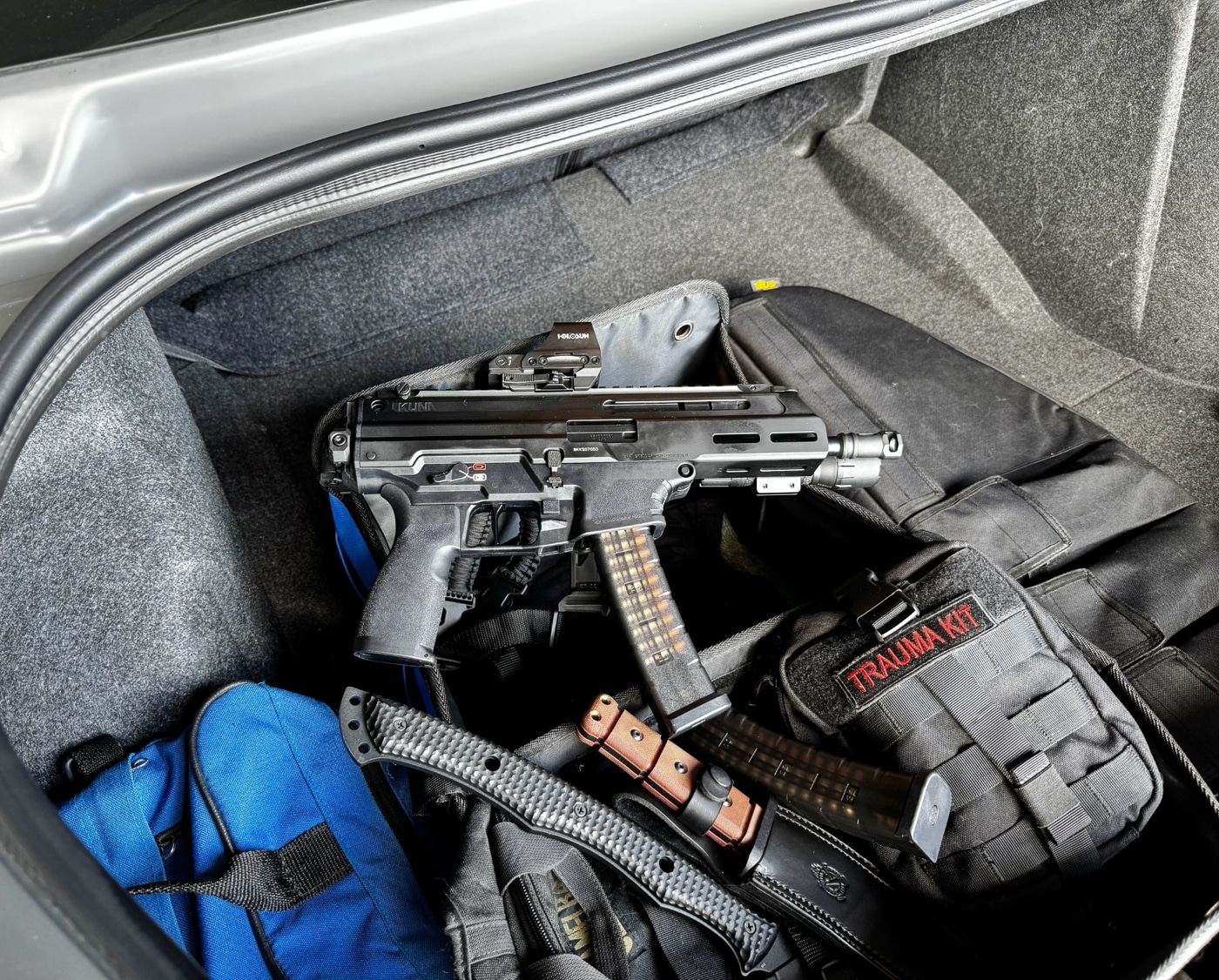
Some people will take along a small pack that can contain a basic medical kit and extra gear in addition to daily needs, but there are places that prohibit bags and backpacks, so it may not always be allowed. Still, having one with you increases your effectiveness.
Your vehicle may be a third source of equipment. Long guns, ammo, more extensive first aid equipment, and rescue tools can be available, but only if you are relatively close in proximity or actually engaged in the incident. Nice to have the extra gear, yet it could be out of reach. We have to adapt to the circumstances.
Legal Implications
In previous articles, I discussed the importance of knowing your state laws in reference to Use of Force and Use of Deadly Force. Learn what applies to you. The disclaimer here is that I am neither an attorney nor am I giving legal advice. Get expert advice. Consult an attorney knowledgeable in these areas. Do your homework.
In Summary
Being an effective Citizen First Responder is a serious endeavor. One should have many hours of study and practice to be prepared if faced with the unavoidable. If you find yourself in one of these situations, will you have the skills (and tools) needed to succeed?
Editor’s Note: Please be sure to check out The Armory Life Forum, where you can comment about our daily articles, as well as just talk guns and gear. Click the “Go To Forum Thread” link below to jump in and discuss this article and much more!
Join the Discussion
Read the full article here

