
The Brief:
The Department of Justice has launched a pattern-or-practice investigation into the Philadelphia Police Department’s firearms licensing procedures. This federal inquiry focuses on whether the city’s subjective character and reputation standards for revoking carry permits violate the Second and Fourteenth Amendments following a confrontation with an armed community group.
Local officials defend the permit revocations as necessary for public safety during confrontational police interactions. Meanwhile, the DOJ aims to prevent administrative overreach that infringes on constitutional rights. The investigation may result in mandated systemic reforms or federal litigation if the city fails to comply with constitutional standards.
PHILADELPHIA, PA — One of the largest municipal law enforcement networks in the United States has officially been placed under the microscope of federal civil rights prosecutors. In a formal notice letter delivered to Philadelphia Mayor Cherelle Parker, the Department of Justice announced a comprehensive pattern-or-practice investigation into the PPD’s firearms licensing and revocation architecture.
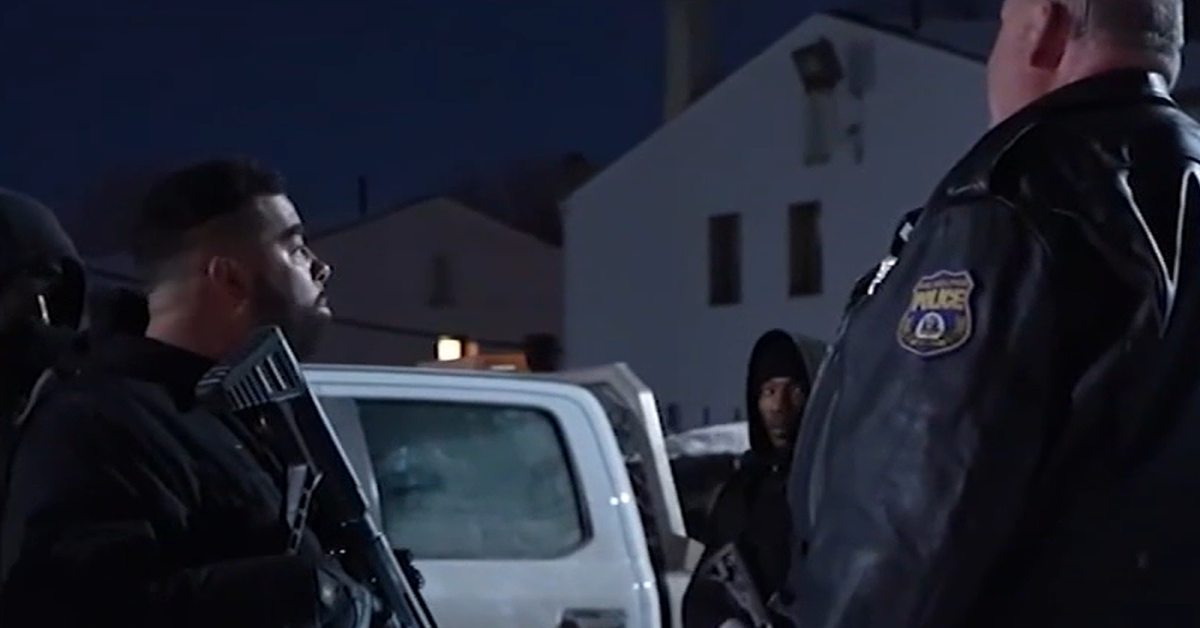
The federal intervention stems directly from a high-stakes street confrontation on January 31, 2026, at the intersection of 23rd and Diamond streets in North Philadelphia. Members of the Black Panther Party for Intercommunal Solidarity (also operating as the Black Lions), an armed community patrol group led by Chairman Paul Birdsong, engaged in a heated, recorded verbal standoff with a PPD officer over an alleged traffic hazard. While the confrontation ended with no arrests, no citations, and no shots fired, the PPD Gun Permit Unit issued letters nine days later abruptly revoking the carry permits of five group members who were visibly armed during the incident.
The Discretion Trap: “Character and Reputation”
The PPD justified the swift liquidations by citing a controversial clause in Pennsylvania’s Uniform Firearms Act. Under current rules specific to Philadelphia, local authorities retain unique, broad authority to deny or cancel an individual’s permit if they deem their “character and reputation” suggest they are likely to act in a “manner dangerous to public safety”.
The DOJ, however, is signaling that this subjective benchmark flies directly into the teeth of recent landmark U.S. Supreme Court precedents, including Bruen and Heller.
Federal Firepower Steps In
The decision to escalate the issue to a federal inquiry highlights a major shift in the political and tactical priorities of the Justice Department under Assistant Attorney General Harmeet K. Dhillon.
“I have directed the Civil Rights Division, through our Second Amendment Section, to defend law-abiding citizens from local authorities who infringe the right to safely carry legal firearms,” Dhillon stated. “Law-abiding Americans, regardless of where they live, should not have to worry that their city will revoke their means of self-defense”.
While local civil rights attorney Paul Hetznecker has noted that the PPD appears to be weaponizing administrative permitting guidelines to unconstitutionally suppress the First Amendment political speech of Black radical organizations, the federal probe will focus strictly on the structural mechanics of the Second and Fourteenth Amendments. The DOJ maintains that letting local bureaucratic units wield arbitrary, personal discretion over a fundamental, enumerated right creates an immediate mechanism for civil rights abuse.
The Local Pushback
Philadelphia Police Commissioner Kevin J. Bethel responded defensively to the announcement, emphasizing the tactical difficulty his street officers face when navigating crowds carrying high-powered long guns. Bethel argued that when individuals go out of their way to confront or provoke officers while visibly armed, it creates an unreasonable public hazard that necessitates a administrative response.
The armed citizen group has retained legal counsel to aggressively combat the city’s permitting parameters. While two members have successfully had their licenses restored after proving they weren’t even present at the January 31 incident, Birdsong is locked in for a high-stakes administrative court hearing this September to reclaim his right to carry.
If the DOJ pattern-or-practice investigation exposes widespread constitutional violations within the permit unit, federal authorities will mandate systemic reforms; if the city resists, the DOJ is fully authorized to file a sweeping federal lawsuit to force compliance.
Safety Tip: This high-profile federal probe offers a vital masterclass in the intersection of “Open Carry Mechanics” and “Police Interaction Tactics.” In states where open carry or the open carriage of long guns is technically legal, doing so in urban, high-stress environments will almost always trigger an immediate, defensive law enforcement deployment. If you choose to exercise your right to openly carry or participate in a structured neighborhood watch, your discipline under observation must be absolute. The moment you use your firearm or your physical presence to “police the police” in a confrontational manner, you give administrative units a baseline argument to attack your “character and reputation” under state code. Cooperate calmly, record the interaction cleanly from a safe distance, and let your legal team eviscerate the department’s policy in a controlled courtroom rather than a street-corner standoff.
Read the full article here